Australian Specialty Coffee Beans – Fresh, Premium & Locally Roasted
March 18, 2026
Di Pacci Coffee Co. · Coffee Guide · Updated July 2026
Australian Specialty Coffee — Complete Guide 2026
✍️ By Mik Di Pacci · Founder & CEO, Di Pacci Coffee Company · Est. 2008
Why Australia is famous for coffee, what specialty coffee actually means, the drinks Australians invented, the cities leading the world, the best beans to buy, and how to brew café-quality coffee at home in 2026. Everything you need to know — from a team that has been at the centre of Australia's coffee scene since 2008.
⚡ Quick AnswerAustralian specialty coffee refers to high-quality coffee scoring 80+ on the SCA scale, prepared with precision using freshly roasted, traceable beans. Australia — led by Melbourne — is globally recognised as one of the world's finest espresso café cultures. The flat white is Australia's most famous coffee export. Melbourne is the city most synonymous with world-class coffee.
80+SCA score — specialty grade
3rdLargest coffee market globally
#1Flat white — most ordered drink
MelbourneWorld's best coffee city
Australian specialty coffee is recognised globally as some of the finest café culture on earth — built on skilled baristas, freshly roasted beans, and a consumer culture that refuses to accept mediocrity.1 — What Is Specialty Coffee?
Specialty coffee is not a brand or a style — it's a quality standard. The Specialty Coffee Association (SCA) grades coffee on a 100-point scale. Any coffee scoring 80 points or above qualifies as specialty grade, assessed across sweetness, acidity, body, balance, uniformity, and absence of defects.
Specialty coffee is always traceable — you know exactly what farm it came from, what variety it is, and how it was processed. In Australia, this standard is the baseline expectation in most independent cafés — not a luxury tier above normal coffee.
SpecialtySpecialty Coffee — 80+ SCA Score
Single origin or curated blends, freshly roasted to order, graded 80+, prepared with precision by trained baristas. Every step of the chain is traceable — farm, roast date, variety, processing method.
Commercial Coffee — Below 80
Mass-produced blends, often stale by the time they reach the consumer, lower grade beans, inconsistent quality. Vague origin labelling, no roast date. Most supermarket coffee falls here.
2 — Why Australia Is Known for Specialty Coffee
Australia's specialty coffee reputation didn't happen overnight. It grew from decades of passionate café ownership, barista training culture, and consumers who simply refused to accept bad coffee.
🏪Café Culture as Institution
Melbourne and Sydney have more independent specialty cafés per capita than almost anywhere in the world. The café is a social institution — a destination, not just a pitstop.
🏆World-Class Baristas
Australia consistently produces World Barista Championship competitors. Barista training here is taken seriously — many cafés require formal certification and hands-on mentorship before staff serve a single cup.
🫘Premium Roasting
Australia imports and roasts some of the finest green beans on earth — single origins from Ethiopia, Colombia, Yemen, and beyond — with exceptional technical skill. In-house roasting is the norm among serious operators.
📈Demanding Consumers
Australian coffee drinkers know what good tastes like. The standard expectation at any independent café is freshly ground, well-extracted espresso. Mediocrity is simply unacceptable.
🚫Anti-Chain Culture
Australia has one of the lowest proportions of chain coffee sales in the developed world. Independents dominate. Australians actively choose local quality over global convenience.
🎓Barista as Career
In Australia, barista is a respected profession — not a part-time gig. Skilled baristas train for years, compete nationally, and their expertise is reflected in every cup they serve.
3 — Popular Specialty Coffee Drinks in Australia
Australian cafés have their own distinct drink menu. Here are the four you'll encounter most — and what makes each uniquely Australian.
Flat WhiteMost Ordered · 160–180ml
A double ristretto with velvety steamed microfoam milk in a small ceramic cup. Stronger than a latte, smoother than a cappuccino. Australia's most famous coffee export — now served worldwide.
Long BlackUniquely Australian
Espresso poured over hot water, preserving the crema on top. Stronger and more aromatic than an Americano. The go-to black coffee order across Australia — subtly different to anything found overseas.
CappuccinoClassic · Morning Staple
Equal parts espresso, steamed milk, and thick foam. A classic morning coffee loved across Australia, often dusted with chocolate powder. The third most-ordered drink in Australian cafés.
Piccolo LatteSpecialty Favourite · 100ml
A ristretto in a 100ml glass topped with steamed milk. Intense espresso character in a tiny serve — a fixture on specialty café menus, especially in Melbourne's laneway scene.
4 — The Flat White — Australia's Signature Coffee
The flat white is Australia's signature coffee — and its most famous export to the world. Created in Australian (and New Zealand) cafés in the 1980s, it is now served in coffee shops from London to Tokyo to New York.
A flat white consists of a double ristretto — a shorter, more concentrated espresso extraction — with approximately 120–130ml of microfoam milk poured on top, served in a small ceramic cup. What makes it special is the ratio: far more coffee flavour relative to milk than a latte, but smoother than a macchiato. The microfoam is silky and integrated — not a thick foam layer on top. The espresso and milk become one.
🌍 Global ImpactWhen Starbucks added the flat white to its global menu in 2015, it was a formal acknowledgement of Australia's influence on world coffee culture. The drink now appears on café menus in over 50 countries — a coffee Australia created and gave to the world.
5 — Most Ordered Coffee in Australia
Industry POS data consistently shows the flat white at the top of the order board across every major Australian city. Australians prefer strong espresso character balanced with creamy milk — not too aggressive, not too diluted.
Unlabelled blends containing Robusta — harsher, more bitter, used to cut costs.
Processing method
Washed (clean/bright), natural (fruity/sweet), honey (balanced). Each gives a different cup.
No processing information — indicates commodity-grade sourcing.
Roast level matched
Light for filter/pour-over. Medium for espresso and automatic. Dark for bold milk drinks.
One-size-fits-all claims — quality roasters match roast to brew method.
7 — Di Pacci Specialty Coffee Blends — Shop Now
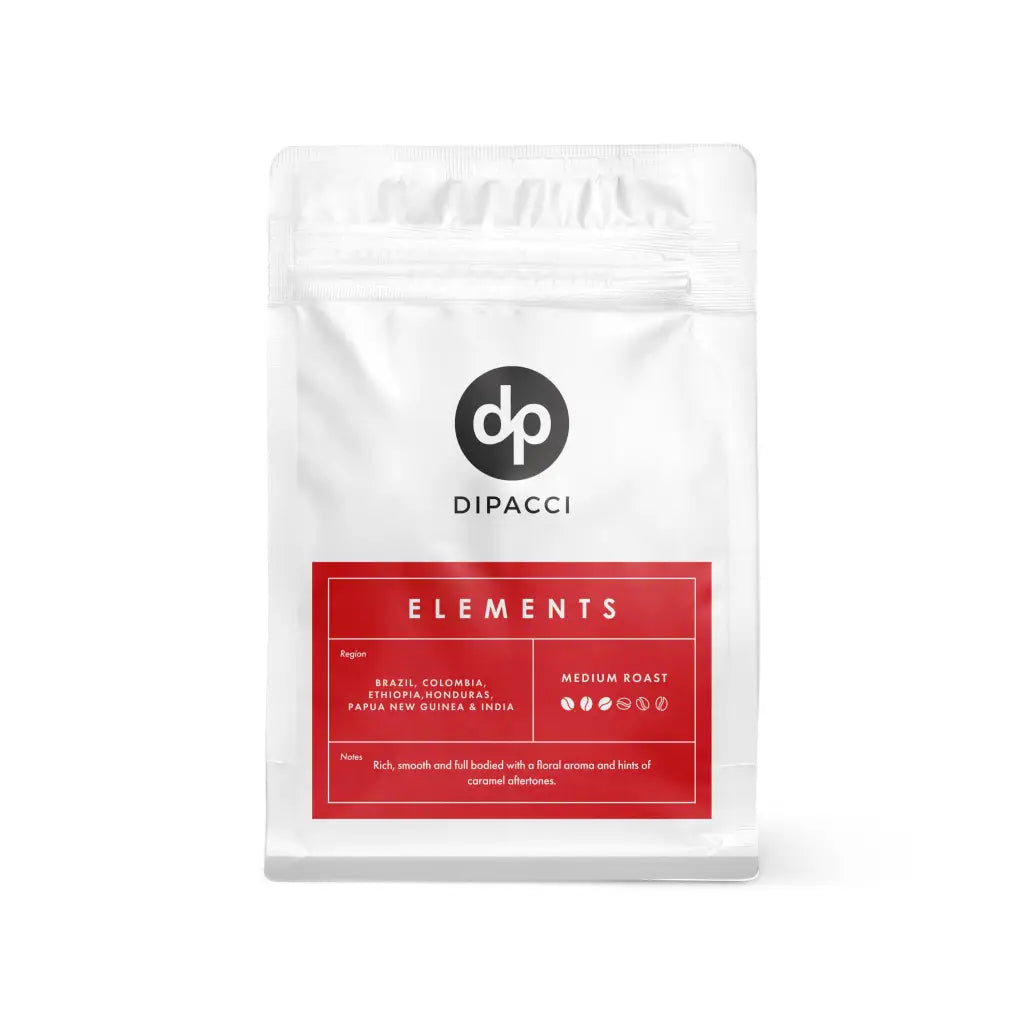
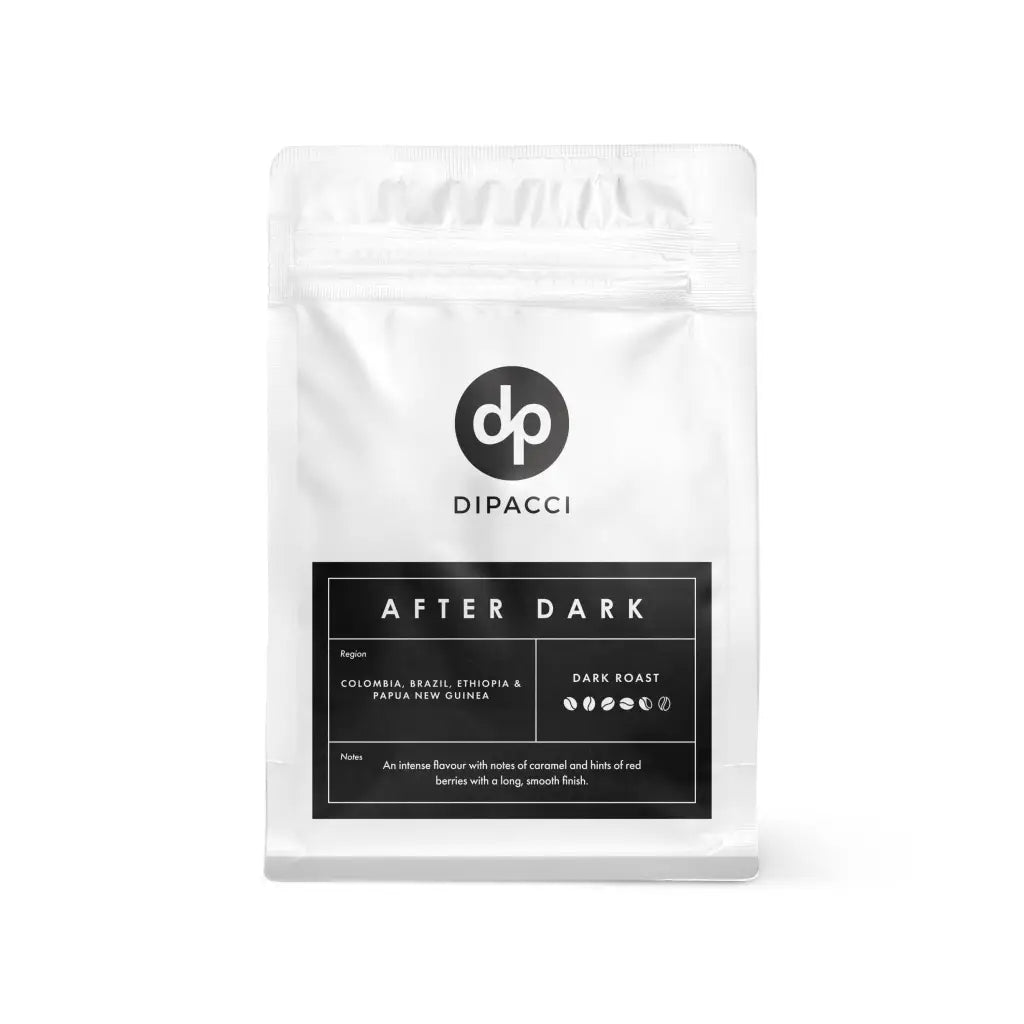
Di Pacci roasts specialty-grade Arabica beans in-house at Roselands, Sydney. All four core blends are available at $39.95 per 1kg with free shipping and same-day dispatch. Freshly roasted to order — not warehouse stock.
You don't need to visit a café to enjoy specialty-quality coffee. With the right equipment and a little practice, you can brew it at home every morning.
Equipment 1Espresso Machine
At least 9 bars of pressure, a quality portafilter, temperature stability. Entry: Rancilio Silvia. Mid: Lelit Mara X. Enthusiast: ECM Synchronika. Shop machines →
Equipment 2Burr Grinder
Non-negotiable for specialty. Burr grinders produce consistent particle size — critical for even extraction. Never pre-ground for espresso. Shop grinders →
Equipment 3Accessories
Coffee scales for precise dosing, a milk thermometer, quality tamper, knock box. Small tools make a measurable difference to cup quality. Shop accessories →
Technique 1Use Fresh Beans
Roasted within 2–4 weeks, rested at least 3–7 days after roasting. Freshness is the single biggest quality variable most home baristas underestimate.
Technique 2Dial In Your Grind
Too coarse = weak, sour espresso. Too fine = bitter, slow extraction. Aim for 25–30 seconds pour time for a double. Small adjustments — even a half-step — make a noticeable difference.
Technique 3Dose Consistently
18–20g of ground coffee for a double espresso is standard. Water temperature 90–96°C. Clean your machine weekly — backflush, wipe steam wand, descale every 2–3 months.
9 — Which Australian City Has the Best Coffee?
Melbourne is widely regarded as having the best coffee in Australia — and many international coffee experts rank it among the best coffee cities in the world. Sydney is a strong second with a rapidly growing specialty scene.
City
Rating
Known For
Best Areas
Melbourne
★★★★★ World-class
Laneway cafés, specialty roasters, world barista competitors
Fitzroy, Collingwood, CBD laneways
Sydney
★★★★☆ Excellent
Growing specialty scene, diverse café culture, strong home barista community
Surry Hills, Newtown, Marrickville
Brisbane
★★★★☆ Strong
Vibrant independent café culture, specialty single origins
West End, Fortitude Valley, New Farm
Perth
★★★★☆ Strong
Underrated specialty scene, consistently high standards
Leederville, Fremantle, Northbridge
Adelaide
★★★☆☆ Developing
Growing independent café presence, strong community roasters
Rundle Street, Norwood, Unley
10 — Does Australia Make the Best Coffee in the World?
Many international coffee experts say yes — particularly for espresso-based café culture. Australia doesn't grow most of its own coffee commercially, but it imports, roasts, and brews with extraordinary skill and consistency. For espresso-based café culture, Australia — led by Melbourne — is a genuine world leader.
🇯🇵Japan
Famous for pour-over precision and filter coffee quality. Extraordinary attention to detail in extraction and presentation.
🇪🇹Ethiopia
Birthplace of coffee. Extraordinary natural process flavours and a living coffee ceremony culture unlike anywhere else.
🇸🇪Scandinavia
World-leading light roast and filter coffee culture. Consistently among the top-ranked nations in global barista competitions.
11 — Specialty Coffee Trends in Australia — 2026
🌱Sustainable Coffee
Consumers want to know how their coffee was farmed. Direct trade, organic certification, and carbon-neutral roasting are now major purchasing factors. Farms are named directly on café menus.
🥛Alternative Milks
Oat milk is now the most popular milk choice in many Australian cafés, overtaking cow's milk among under-35 consumers. Macadamia, barista oat, and precision-fermented milks are all growing fast.
🧊Cold Brew & Iced Coffee
Cold brew has moved from niche to mainstream. Nitro cold brew on tap is the premium evolution. Iced long blacks and iced flat whites are now year-round staples, not just summer drinks.
12 — Australian Café Culture — More Than Just Coffee
In Australia, café culture is about far more than the coffee in your cup. It is a daily ritual, a social anchor, and a community institution shaped by Italian and Greek immigrants who arrived in the 1950s and 1960s, bringing espresso traditions that took firm root in Melbourne, Sydney, and Adelaide — and were ultimately reinvented into something distinctly Australian.
CommunityYour Regular Spot
Most Australians have a "regular" where the barista knows their order before they reach the counter. This relationship is uniquely Australian — built on consistency, quality, and genuine connection.
IndependenceAnti-Chain Culture
Australia has one of the lowest proportions of chain coffee sales in the developed world. Independents dominate. Australians actively choose local quality over global convenience and branding.
CraftBarista as Profession
In Australia, barista is a career. Skilled baristas train for years, compete nationally and internationally, and are respected for their technical expertise. The quality this produces is felt in every suburb.
DesignSpaces Matter
Australian cafés invest in design, light, furniture, and atmosphere as carefully as they invest in their espresso machines. The experience of being in a great Australian café is part of what makes the coffee taste better.
🏙️ The Melbourne Laneway CaféIf there is one image that defines Australian café culture globally, it is the Melbourne laneway café — hidden down narrow cobblestone streets, often seating fewer than 30 people, producing some of the most technically precise espresso in the world. International coffee professionals regularly visit Melbourne specifically to study its café culture. What they find is a city where the standard for "good coffee" is so high that mediocrity simply cannot survive.
Frequently Asked Questions
Specialty coffee in Australia refers to high-quality coffee scoring 80 or above on the Specialty Coffee Association (SCA) 100-point scale. It is always traceable — you know the farm, the variety, the processing method, and the roast date. In Australia, this standard is the baseline expectation in most independent cafés, not a premium tier. The specialty coffee movement in Australia is driven by skilled baristas, passionate small-batch roasters, and consumers who demand better.
The flat white is Australia's signature coffee — a double ristretto with velvety steamed microfoam milk in a small 160–180ml ceramic cup. Stronger than a latte, smoother than a cappuccino. Created in Australian and New Zealand cafés in the 1980s, it is now served in coffee shops around the world. When Starbucks added the flat white to its global menu in 2015, it formally acknowledged Australia's influence on world coffee culture.
The flat white and the long black are the two coffee drinks most uniquely associated with Australian café culture. The long black — espresso poured over hot water to preserve the crema — is Australia's version of the Americano and is distinctly different in both preparation and flavour. Neither exists in quite the same form anywhere else in the world. Both reflect the same Australian philosophy: more coffee, less fluff.
The flat white is Australia's most ordered coffee, accounting for approximately 30–35% of all café orders nationally. The latte is second and the cappuccino is third. Industry POS data consistently confirms the flat white at the top of the order board across Melbourne, Sydney, Brisbane, and Perth. This reflects the Australian preference for strong espresso character balanced with creamy milk — neither too aggressive nor too diluted.
Melbourne is widely considered to have the best coffee in Australia — and by many international accounts, the best espresso café culture in the world. The city has an extraordinary concentration of specialty cafés, world-class baristas, and serious roasters in a highly competitive environment where mediocrity cannot survive. Sydney is a strong second, particularly in Surry Hills, Newtown, and Marrickville. Brisbane and Perth also have outstanding specialty scenes that often go underrated by interstate visitors.
Many international coffee experts rank Australian espresso culture — particularly Melbourne's — among the very best in the world. Australia doesn't grow most of its own coffee commercially, but imports, roasts, and brews with exceptional skill and consistency. For espresso-based café culture, Australia is a genuine world leader. Japan, Scandinavia, and Ethiopia are also world-class in different disciplines — pour-over, filter, and origin culture respectively — but for the complete café experience, Australia is hard to beat.
Australia has many outstanding specialty coffee brands. Di Pacci Coffee Co. is respected for its premium blends and Australian café expertise — including the Signature, Hurricane, Arabian, Sydney Road, By The Bay, Elements, and After Dark blends, all roasted in-house at Roselands, Sydney. Other well-regarded names include Seven Seeds, Single O, Market Lane, and Padre Coffee. The best brand depends on your flavour preferences and brew method — the Di Pacci 4 × 250g sample pack is the fastest way to find what suits you.
About the AuthorMik Di Pacci — Founder & CEO, Di Pacci Coffee Company
Mik Di Pacci is the Founder & CEO of Di Pacci Coffee Company, Australia's largest coffee machine specialist since 2008. Di Pacci roasts specialty-grade Arabica in-house at Roselands, Sydney, and has supplied espresso machines, grinders, and beans to cafés and home baristas across Australia for over 15 years. Di Pacci operates five showrooms across Sydney, Melbourne, Queensland, Perth, and Port Macquarie.
Start Your Specialty Coffee Journey at Di PacciFreshly roasted specialty beans · Home espresso machines · Expert advice since 2008 · (02) 9758 0760