Di Pacci Coffee Company — Best Home Coffee Machines — Australia 2026
Best Home Coffee Machines in Australia 2026
✍️ By Mik Di Pacci · Founder & CEO, Di Pacci Coffee Company · Updated July 2026
The best home coffee machine depends on your budget, your brewing style, and how involved you want to be. This guide covers every meaningful category — from the best beginner machine under $700 to the best premium dual-boiler machine under $5,000 — with honest recommendations based on what Di Pacci's team sells, services, and uses daily. Every machine below is in stock at Di Pacci with full Australian warranty and in-house service support.
⚡ Quick Answer — Best Home Coffee Machines Australia 2026Beginners: Breville Bambino Plus — PID, 3-second heat-up, auto milk wand, compact. Best Italian entry: Lelit Anna PID — 58mm commercial portafilter, made in Italy, PID included. Best mid-range: Rancilio Silvia V6 — commercial brass boiler, 20-year longevity, best steam at the price. Best dual boiler: Profitec Pro 400 — simultaneous brew and steam, dual PIDs, German made. Best premium: Lelit Bianca V3 — flow profiling, dual boiler, E61 group head, walnut accents. Whatever you choose: always pair with a quality burr grinder — the grinder improves your espresso more than the machine.
🔧In-House ServiceWe fix what we sell — qualified technicians on-site
☕5,000+ MachinesNew, certified pre-owned, and demo stock
🎓Barista TrainingIn-store courses — beginner to advanced
Answer These 4 Questions First — Find Your Machine Faster
What do you drink most?
Flat whites, lattes, cappuccinos → strong steam wand essential — semi-auto with a quality boiler or dual boiler. Espresso / long blacks → focus on shot quality and PID. Single or dual boiler both work. Just want it simple → bean-to-cup automatic machine.
How involved do you want to be?
I want to learn the craft → semi-automatic espresso machine. I just want coffee fast → Breville Bambino Plus or bean-to-cup automatic. Somewhere in between → Breville Barista Express Impress or similar all-in-one.
What is your total budget?
Under $1,000 total → Bambino Plus + budget grinder. $1,000–$2,500 → Rancilio Silvia V6, Lelit Anna PID, or ECM Classika PID + grinder. $2,500+ → Profitec Pro 400 or Lelit Bianca V3 + quality grinder.
How long do you plan to keep it?
2–5 years (starting out) → Breville — good value, lower long-term parts availability. 10–20+ years → Rancilio Silvia, ECM, Lelit, or Profitec — European-made, fully serviceable, decades of parts availability at Di Pacci.
Best by Budget — At a Glance
$500–$1,500Entry Level
Great espresso is achievable here. Prioritise PID temperature control and a 58mm portafilter. Always budget for a grinder alongside the machine. Picks: Breville Bambino Plus · Lelit Anna PID
$1,500–$3,000Sweet Spot
The best value tier for serious home baristas. Commercial-grade components, genuine durability, machines that reward skill development over many years. Picks: Rancilio Silvia V6 · ECM Classika PID
$3,000–$5,000+Enthusiast
Dual boilers, flow profiling, and build quality that rivals commercial equipment. Machines serious home baristas keep for 15–20+ years. Picks: Profitec Pro 400 · Lelit Bianca V3
💰 The most important rule: budget at least $300–$600 for a grinder alongside your machine. The grinder improves your espresso more than the machine itself — this is the single most consistent finding across Di Pacci's 15 years of selling and servicing equipment.
Top Picks — Best Home Coffee Machines Australia 2026
Best BeginnerEditor's PickUnder $700
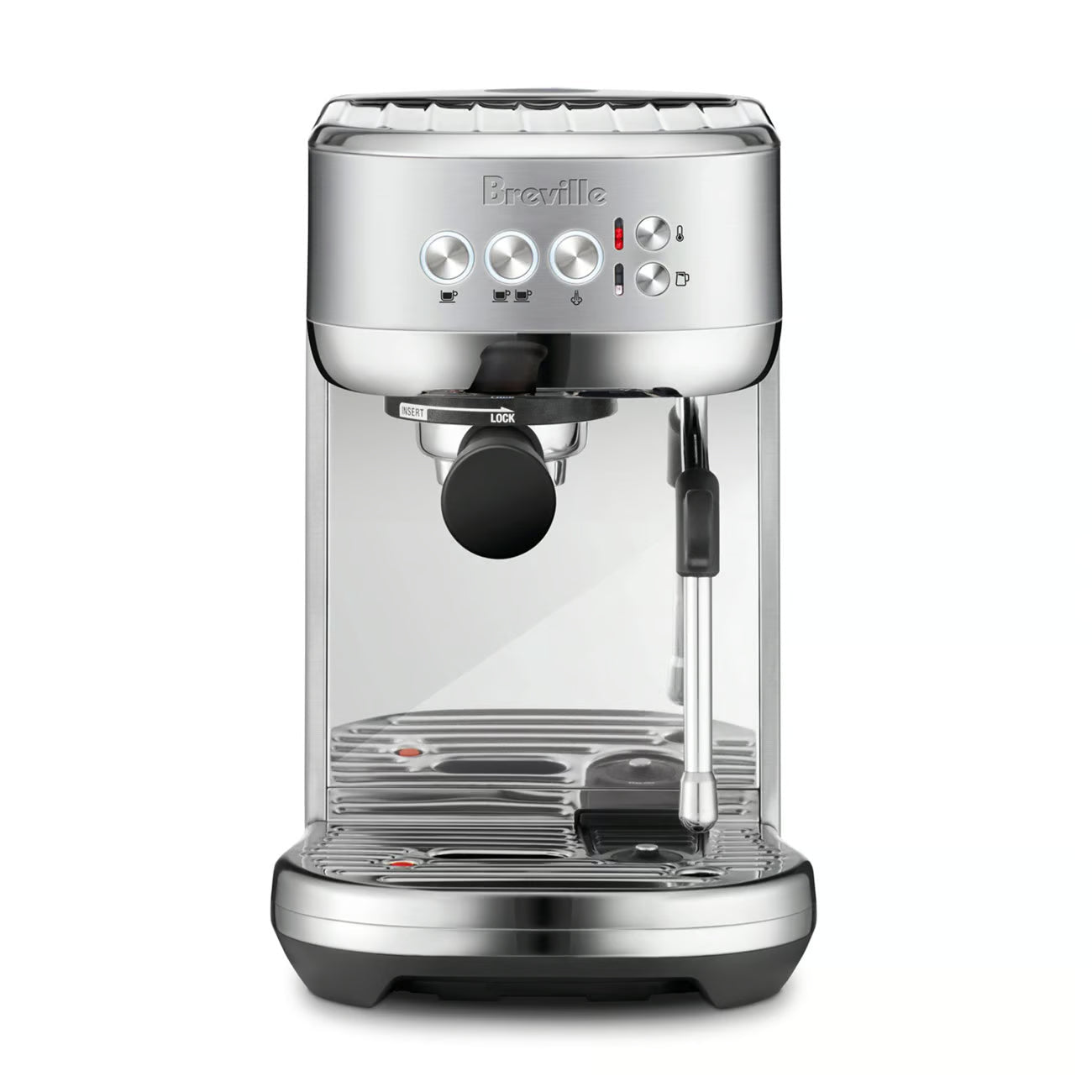
Breville Bambino Plus
The best starting point for home espresso in Australia. At under $650, it includes a PID temperature controller — a feature rarely seen at this price — heats up in 3 seconds, and produces genuinely good espresso without demanding the technique that machines in the next price tier require. The automatic steam wand textures milk at the touch of a button, making lattes and flat whites accessible from day one. The 54mm portafilter is the one meaningful limitation, but at this price it's a completely acceptable trade-off. Pair with a quality grinder for a capable setup under $1,200 total.
ThermoJet — 3 sec heat-up54mm portafilterPID ✓Auto milk wand195mm wideDesigned in Australia
Di Pacci Verdict
The best value espresso machine in Australia for beginners. PID at this price is exceptional. If you're buying your first serious espresso machine, start here.
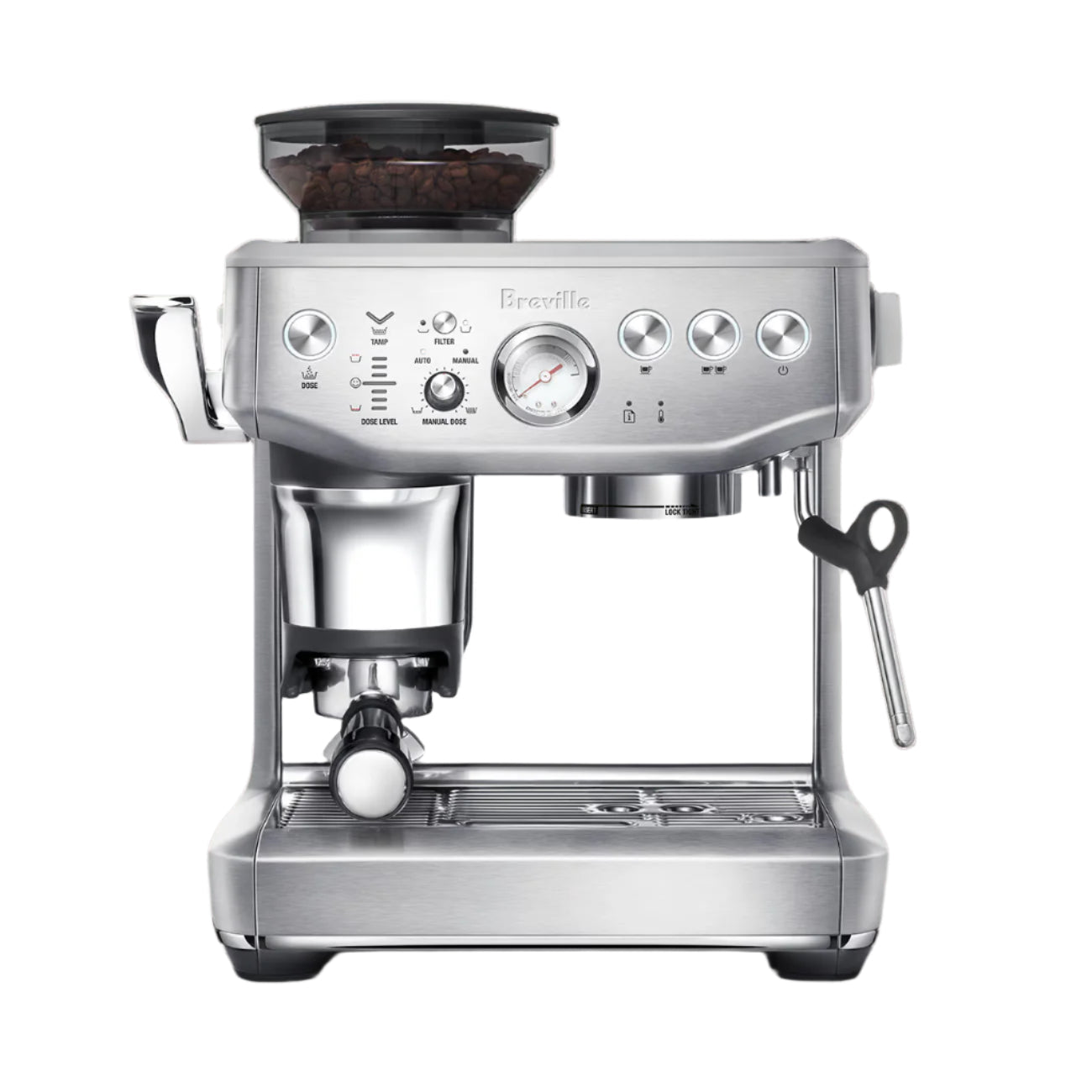
For buyers who want a single unit with no separate grinder to manage, the Barista Express Impress is the best integrated machine in Australia. It combines a conical burr grinder, a smart tamping system that applies consistent pressure automatically, and a PID-controlled espresso machine in one body — removing two of the most common sources of inconsistency for beginner home baristas. Not as capable as a separate machine and grinder at the same budget, but the convenience is genuine and coffee quality is good.
Best all-in-one espresso machine in Australia. The Impress tamping system is a genuine improvement over the standard Barista Express — meaningful for beginners.
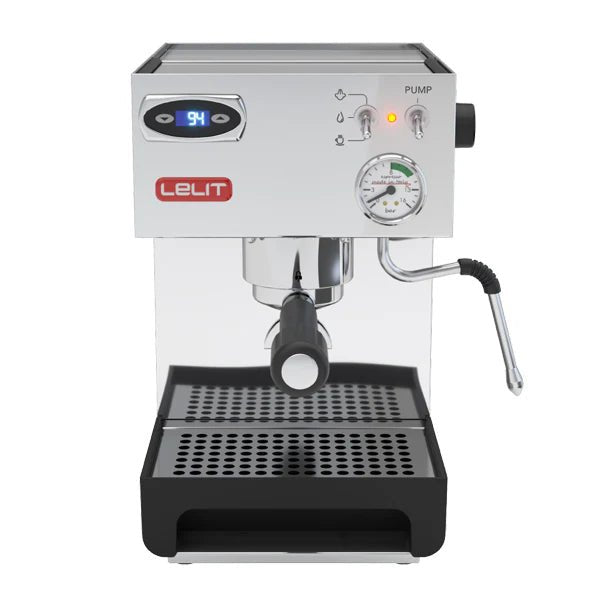
The best entry-level Italian espresso machine in Australia for buyers who want a step up from appliance-tier equipment. Made in Italy with a stainless steel body, 58mm commercial portafilter, and built-in PID temperature controller — it delivers genuine prosumer capability at an accessible price. The 58mm portafilter is the critical upgrade over the Breville Bambino Plus, opening up the full range of aftermarket baskets and accessories. For buyers serious about coffee who want a machine they can grow with for 5–7+ years, the Anna PID is outstanding value.
Single boiler — stainless58mm portafilter ✓PID ✓Manual steam wandMade in Italy — Lelit
Di Pacci Verdict
Best Italian-made espresso machine under $1,000 in Australia. PID + 58mm portafilter at this price is outstanding value. Pair with a Turin DF54 for a complete setup under $1,400.
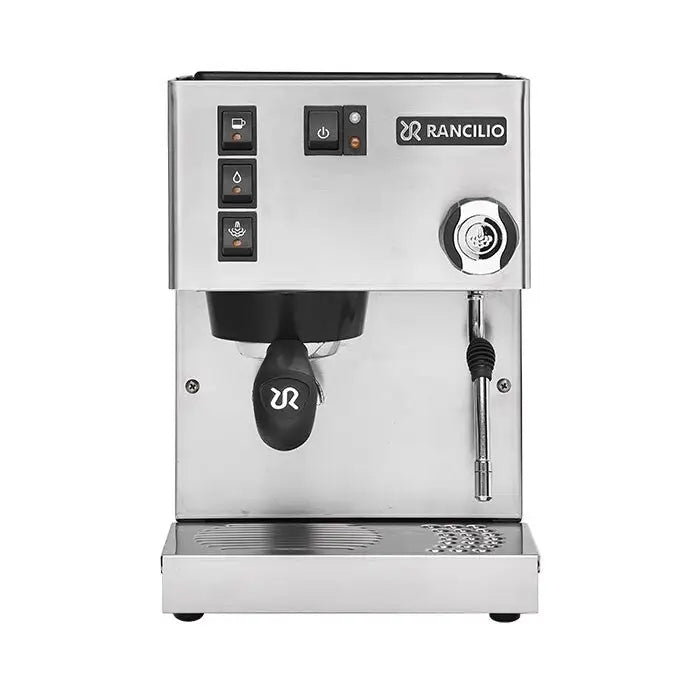
The Rancilio Silvia has been in production since 1997 — and the V6 remains the benchmark mid-range home espresso machine in Australia in 2026. Its 300ml lead-free brass boiler, stainless steel AISI 304 frame, commercial-weight 58mm portafilter (~680g), and 3-way solenoid valve are components found in machines costing two or three times the price. Di Pacci technicians still service first-generation Silvia machines from the early 2000s. The Silvia does not have a PID as standard — temperature surfing is part of the daily workflow but becomes second nature quickly. The best steam wand at this price point in Australia, bar none.
The benchmark prosumer single-boiler machine. Best-in-class build, steam, and longevity at this price. Buy it with a quality grinder and keep it for a decade or more.
Best PID Single BoilerE61 Group HeadGerman Engineered
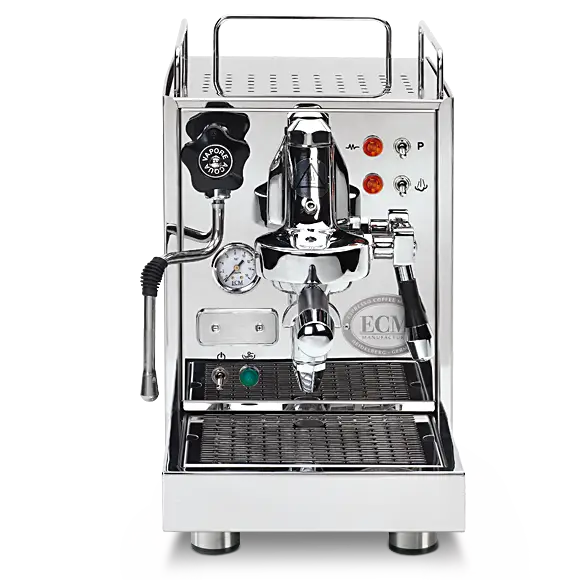
ECM Classika PID
The ECM Classika PID occupies a compelling position — a German-engineered machine with a built-in PID, stainless steel 304 construction, and commercial-grade E61 group head between the Rancilio Silvia and the dual boiler tier. The E61 group head provides exceptional thermal stability and pre-infusion — two features that meaningfully improve extraction consistency. For buyers who want the Silvia's build quality but don't want to learn temperature surfing, the ECM Classika PID is the natural step up. PID allows precise temperature control from the front panel — ideal for dialling in light roasts.
E61 group head — pre-infusion58mm portafilter ✓PID ✓ front panelManual wandStainless steel 304Germany/Italy — ECM
Di Pacci Verdict
Best single boiler machine with PID and E61 group head in Australia at this price. A step above the Silvia for buyers who want front-panel temperature control.
Best Dual BoilerSimultaneous Brew + SteamGerman Made
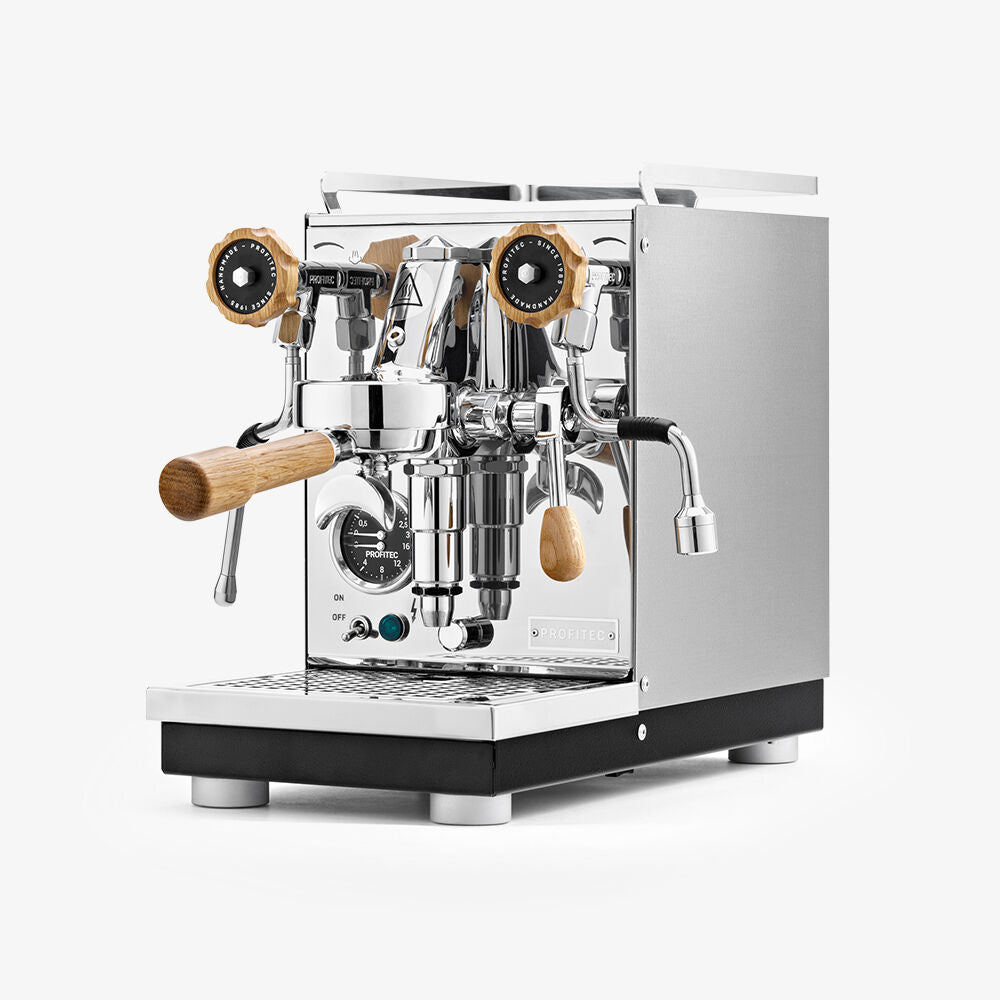
Profitec Pro 400
Di Pacci's most recommended dual boiler machine under $4,000 in Australia. Dual boilers mean simultaneous brewing and steaming with no wait time — the single biggest quality-of-life upgrade from a single boiler machine. The PID controls both boilers independently. Build quality is exceptional — stainless steel 304 construction, commercial-grade group head, and Profitec's characteristically clean German design. For households making multiple milk drinks back-to-back, the Pro 400 eliminates the brew-then-wait-for-steam frustration entirely.
Best dual boiler machine under $4,000 in Australia. Simultaneous brew and steam, dual PIDs, and German build quality that will last 20+ years with proper care.
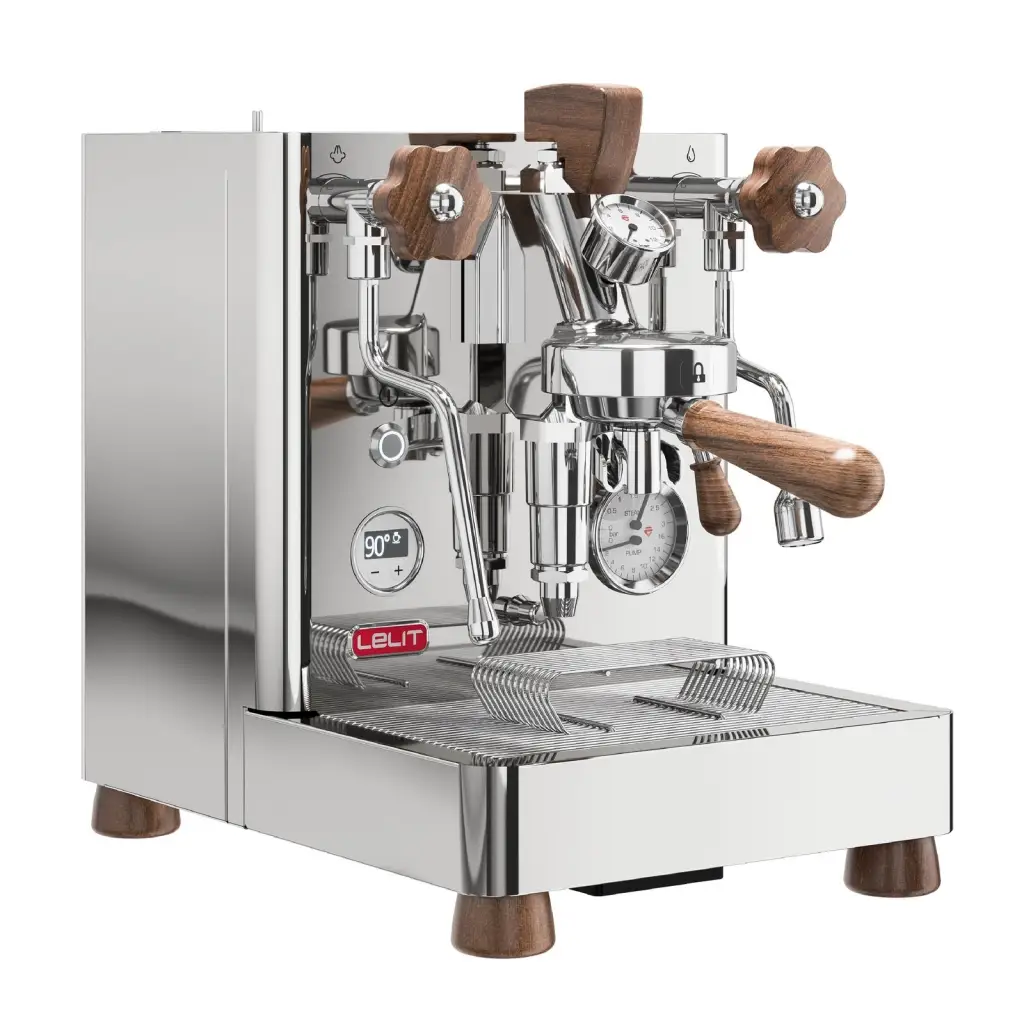
The most coveted home espresso machine in Australia under $5,000. The Bianca V3 combines dual boilers, dual PID temperature control, a flow profiling paddle for manual pressure control, walnut accents, and a polished stainless steel E61 group head — flow profiling is typically reserved for machines costing $10,000+. The espresso quality, when paired with a high-end grinder, rivals what most cafés produce. For buyers who want the best home espresso machine they will ever need to own, this is it.
Dual boiler — dual PIDsE61 group head ✓58mm portafilter ✓Flow profiling paddle ✓Walnut accentsMade in Italy — Lelit
Di Pacci Verdict
The best home espresso machine under $5,000 in Australia — and the last machine most serious home baristas will ever need to buy. Flow profiling at this price is extraordinary value.
The Grinder — The Most Important Purchase You'll Make
The grinder improves your espresso more than the machine itself. Coffee goes stale within 15–30 minutes of grinding. Grind size directly controls extraction — too coarse is sour and weak, too fine is bitter and harsh. Without an adjustable burr grinder, you cannot dial in your espresso regardless of how capable the machine is.
Di Pacci's most recommended home grinders for 2026:
Under $500Turin DF54 V3
54mm flat burrs, ultra-low retention, ioniser, stepless adjustment. Outstanding value — the best grinder under $500 in Australia.
$500–$800Rancilio Rocky Doserless
Classic, durable, stepless adjustment. The traditional Silvia pairing. Built to last decades.
$800–$1,200Varia VS3 Gen 2
58mm flat burrs, single dose, excellent consistency across espresso to filter. Versatile and capable.
$1,200+Mahlkönig X54
Commercial-grade performance in a home body. The best home grinder available in Australia at this price.
Frequently Asked Questions — Home Coffee Machines Australia
The best home coffee machine depends on your budget and how you drink your coffee. For beginners: Breville Bambino Plus — PID, 3-second heat-up, automatic milk wand. For intermediate baristas developing their skills: Rancilio Silvia V6 or Lelit Anna PID. For serious enthusiasts: Lelit Bianca V3 — dual boilers, flow profiling, E61 group head. Whatever you choose, always pair with a quality burr grinder — the grinder improves your espresso more than the machine itself.
Yes — a quality burr grinder is essential for home espresso. Pre-ground coffee goes stale within 15–30 minutes of grinding and cannot be adjusted to suit your machine. The grinder impacts espresso quality more than the machine itself — this is the most consistent finding across Di Pacci's experience selling and servicing thousands of home setups. Budget $300–$600 minimum for a grinder alongside your espresso machine. Di Pacci offers machine + grinder bundles at package pricing.
Entry level: $800–$1,500 total (machine plus grinder). Mid-range: $1,500–$3,000. Enthusiast: $3,000–$6,000+. At two coffees per day at $5.50 each, even a $2,000 setup pays for itself within 12 months compared to buying café coffees. The key rule: always set a total budget including the grinder and accessories, not just the machine.
PID stands for Proportional-Integral-Derivative — a digital temperature controller that holds the boiler at a precise setpoint (typically within ±0.3°C). Without PID, simple thermostats allow temperature to drift across a wider range, causing shot-to-shot inconsistency. PID is particularly valuable for lighter roasts, which are more sensitive to temperature variation. It is one of the most important features to prioritise when buying a home espresso machine at any budget.
A single boiler machine uses one boiler for both brewing and steaming — you must wait 30–60 seconds between pulling a shot and steaming milk while the boiler heats to steam temperature. This is manageable for 1–2 coffees but slows down multi-drink mornings. A dual boiler machine has two separate, independently controlled boilers — one for brew, one for steam — allowing simultaneous espresso extraction and milk steaming with no wait time. The Profitec Pro 400 and Lelit Bianca V3 are both dual boiler machines stocked at Di Pacci.
Yes. Di Pacci ships home coffee machines Australia-wide with free shipping on orders over $200. Typical delivery is 1–3 business days to metro areas. You can also visit any of our five Australian showrooms to see machines in person and take them home same day — Sydney (Roselands), Melbourne (Thomastown), Queensland (Southport), Perth (West Perth), and Port Macquarie. Finance options including Afterpay, Zip, and PayPal are available online and in-store. Call (02) 9758 0760 for personalised advice before purchasing.
Yes, if you drink coffee daily. Two café coffees per day at $5.50 each costs over $4,000 per year. A quality $1,500–$2,500 machine pays for itself within 12 months and lasts 10–20+ years with proper maintenance. European-made machines (Rancilio, Lelit, ECM, Profitec) are fully serviceable by Di Pacci's in-house team with genuine parts available for decades. The coffee quality is also genuinely better when you use freshly ground beans at home.
About the AuthorMik Di Pacci — Founder & CEO, Di Pacci Coffee Company
Mik Di Pacci is the Founder & CEO of Di Pacci Coffee Company, Australia's largest coffee machine specialist operating since 2010. Di Pacci operates five showrooms across Sydney, Melbourne, Perth, Port Macquarie, and Queensland, with an in-house roastery and service workshop. Every machine recommended in this guide is stocked, serviced, and backed by Di Pacci's expert team.
Shop the Best Home Coffee Machines at Di PacciAustralia's largest coffee machine specialist — expert advice, free shipping over $200, full Australian warranty, in-house service · (02) 9758 0760
We are from Advisors SEO House We are Providing Paid guest posts on our different Websites to many Companies for their product promotion, Services, and Ranking Purposes our clients are 100% Satisfied with Our Services.
We can Promote your Products or Services and Increase your Earning on Our websites.Through our websites Millions of clients of our Company SEO Advisor House will visit your website through Your Link.
Please visit our company High-Quality websites
Note: these all websites %100 original traffic you can check first before order and we also mentioned website niche.
1…Site : https://www.urbansplatter.com/
Traffic: 9.18K
Niche: Home Improvement
2…Site : https://www.digitaljournal.com/
Traffic: 15.8K
Niche: News and Tach
3…Site : https://www.bignewsnetwork.com/
Traffic: 73.3k
Niche: Business
4…Site : https://fashionisks.com/
Traffic: 1.18K
Niche: Pure Fashion
5…Site : https://artdaily.com/
Traffic: 33.8K
Niche: Art



1 comment
Eion Bailey
Hi.
We are from Advisors SEO House We are Providing Paid guest posts on our different Websites to many Companies for their product promotion, Services, and Ranking Purposes our clients are 100% Satisfied with Our Services.
We can Promote your Products or Services and Increase your Earning on Our websites.Through our websites Millions of clients of our Company SEO Advisor House will visit your website through Your Link.
Please visit our company High-Quality websites
Note: these all websites %100 original traffic you can check first before order and we also mentioned website niche.
1…Site : https://www.urbansplatter.com/
Traffic: 9.18K
Niche: Home Improvement
2…Site : https://www.digitaljournal.com/
Traffic: 15.8K
Niche: News and Tach
3…Site : https://www.bignewsnetwork.com/
Traffic: 73.3k
Niche: Business
4…Site : https://fashionisks.com/
Traffic: 1.18K
Niche: Pure Fashion
5…Site : https://artdaily.com/
Traffic: 33.8K
Niche: Art
6…Site : https://programminginsider.com/
Traffic: 8.06k
Niche: Software
7…Site : https://healthsciencesforum.co.uk/
Traffic: 1.16K
Niche: Pure Health
8…Site : https://techbullion.com/
Traffic: 20.2K
Niche: Pure Technology
9…Site : https://jalbiteblogfoodtrends.com/
Traffic: 1.55K
Niche: Pure Food
10.Site : https://trans4mind.com/
Traffic: 15.9K
Niche: Travel
Best Regards.
Eion Bailey