


Is Machine Coffee Good for Health?
That first cup of coffee is a non-negotiable part of your morning. But as you push the button on your machine, you might wonder if it's actually good for you. You've heard the rumors—good for your brain, bad for your heart, or maybe the other way around. One of the biggest health factors isn't your coffee beans—it's the machine you use to brew them.
First, let's start with the good news. Coffee is loaded with beneficial compounds called polyphenols, which deliver a powerful dose of antioxidants in brewed coffee. Think of antioxidants as your body's personal bodyguards, helping to protect your cells from daily damage. For many people, coffee is the single largest source of these helpful compounds in their diet, making the benefits of fresh ground coffee beans significant.
This antioxidant boost is why research from institutions like Harvard's School of Public Health consistently links regular coffee drinking to better cognitive function and a lower risk of certain diseases. These core benefits are present in your mug regardless of the machine you use, so you can feel good knowing that your daily habit starts with a healthy foundation.
The Single Most Important Factor: Paper Filter vs. Metal Filter
When it comes to your daily cup, the healthiest way to make coffee at home has less to do with the beans you buy and more to do with your brewing method. The entire difference boils down to one simple component: the filter.
Think of a paper filter—like the kind in a standard drip machine or tucked inside a Keurig pod—as an incredibly fine gatekeeper. It's so effective that it doesn't just stop the coffee grounds; it also catches and removes most of the natural, oily compounds found within the coffee beans themselves. This is the crucial detail in the paper filter vs. metal filter coffee health debate.
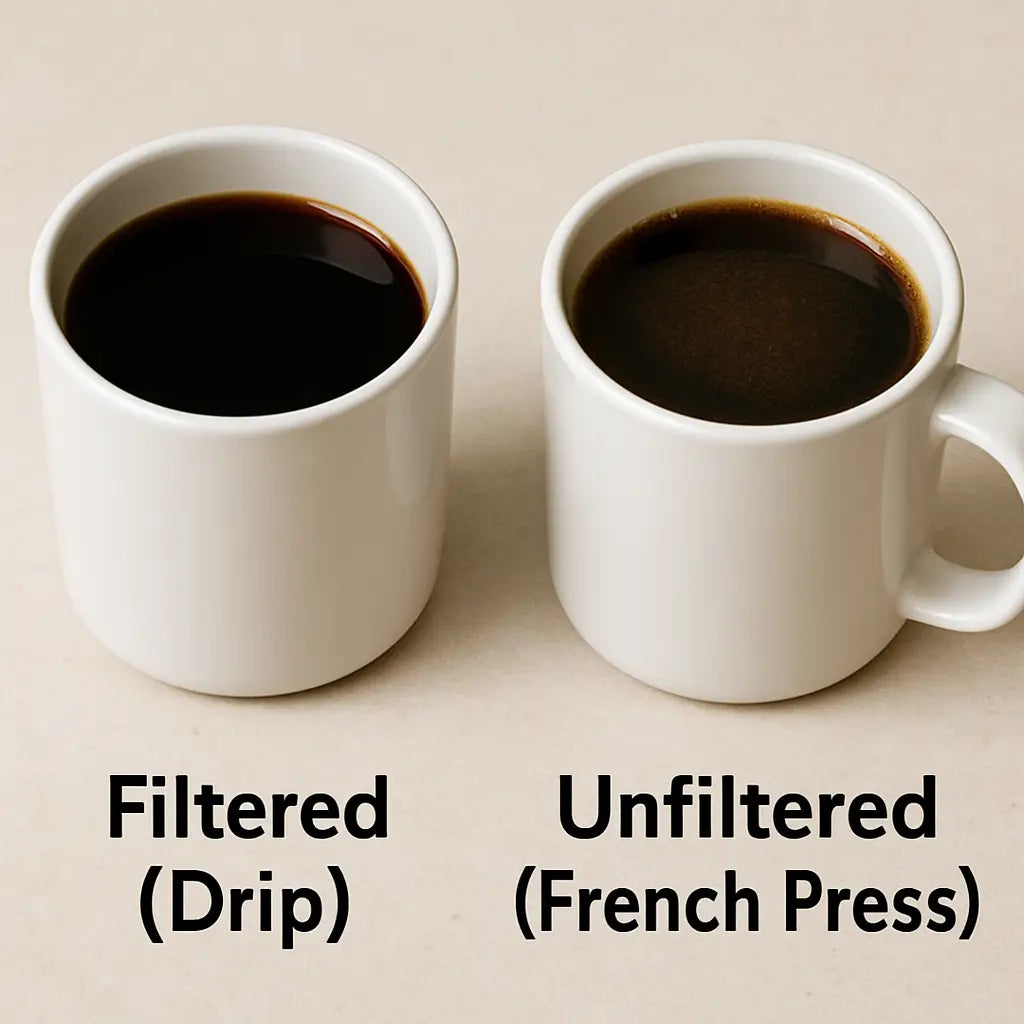
On the other hand, methods that use a metal filter (like a French press) or no filter at all (like Turkish coffee) let those oils pass directly into your cup. This is why French press coffee often has a richer mouthfeel and you might notice a subtle oily sheen on the surface. When considering espresso vs. drip coffee health, the same logic applies, as espresso is brewed under high pressure without a paper filter.
So, what's the big deal about a few coffee oils? While they add to the flavor, these compounds are the primary reason certain coffee habits can impact your cholesterol levels. It is useful to understand what these oils are and who really needs to pay attention to them.
What Are 'Coffee Oils' and Why Do They Affect Cholesterol?
Those rich oils we mentioned aren't an additive; they are a natural part of the coffee bean, contributing to the full-bodied flavor and velvety texture of unfiltered brews like French press. While delicious, these oils contain specific compounds that can have an unintended effect on your body's chemistry.
Inside these natural oils are two primary compounds, cafestol and kahweol, found in high amounts in unfiltered coffee. Studies have shown that cafestol, in particular, can signal your liver to produce more LDL cholesterol—often called the "bad" kind because high levels can contribute to plaque buildup in your arteries.
For most people, this isn't a cause for panic. The effect is most noticeable with high consumption. Research from major health journals indicates that drinking about five cups of unfiltered coffee daily could raise LDL cholesterol by 6 to 8 percent. While this may be a small change for someone with healthy levels, it's a significant consideration for anyone already managing their cholesterol.
So, is machine coffee good for you? Absolutely, but the secret lies in the filter. The good news is that a simple coffee machine paper filter is exceptionally good at its job, trapping over 95% of these cholesterol-raising oils. This means you can enjoy the health benefits of your daily coffee ritual without worrying about the cafestol.
The Healthiest Choice on Your Counter: Why Drip Coffee Wins for Heart Health
If you rely on a classic drip coffee maker for your morning cup, you're in luck. When it comes to balancing health benefits with convenience, this everyday machine is one of the best choices you can make, especially for protecting your heart. It all comes down to that simple, disposable paper filter.
That unassuming paper filter acts as a powerful gatekeeper. As hot water drips through the grounds, the filter is fine enough to trap the vast majority of the coffee oils that can raise "bad" (LDL) cholesterol. This means you get to keep all the beneficial parts of the coffee—like the rich flavor and protective antioxidants—while leaving the problematic compounds behind in the filter. It's truly the best of both worlds.
The drip method is one of the healthiest ways to make coffee at home. It delivers a consistent, delicious brew while minimizing health risks.
Health Benefits of Drip Coffee:
- Traps over 95% of cholesterol-raising oils.
- Delivers a full dose of protective antioxidants.
- Provides a simple, low-effort, heart-healthy cup.
This makes the standard drip machine an excellent default choice. But what about the even more convenient single-serve pods that have taken over so many kitchens?
What About Keurig & Nespresso? The Health Impact of Coffee Pods
For the millions who rely on a Keurig or Nespresso for that instant caffeine fix, the health question is crucial. The good news is that these machines operate on the same heart-healthy principle as a drip brewer. Hidden inside each single-serve pod is a small paper or fiber filter that does the exact same job: it traps the oily compounds that can negatively affect cholesterol levels, making it one of the best coffee makers for health benefits.
Because the coffee passes through that built-in filter, your pod machine delivers a cup that is very similar, from a health perspective, to one from a classic drip machine. You get the convenience and speed without sacrificing the key benefit of filtered coffee. This makes pod-based systems a perfectly sound choice for your daily brew, especially if you are keeping an eye on your heart health.
Of course, the coffee itself is only part of the story, as some people raise concerns about the plastic used in the pods. But when focusing strictly on the coffee compounds, pod machines are a healthy, filtered option. This raises an important question: what happens when you remove the paper filter from the equation entirely? The answer lies in a beloved brewing method known for its rich, bold flavor.
The French Press Dilemma: Maximizing Flavor vs. Heart Health
For many coffee lovers, nothing compares to the deep, rich flavor of a French press. The secret to that full-bodied taste lies in its design: instead of paper, it uses a metal mesh filter that allows all of the coffee's natural oils and microscopic grounds to flow directly into your cup. While this creates an incredibly satisfying texture and taste, it also introduces a potential health trade-off.
The very thing that makes French press coffee so delicious—those unfiltered natural oils—is also what you need to be mindful of. These are the same compounds that studies have consistently shown can cause an increase in "bad" (LDL) cholesterol levels for some people when consumed regularly. This officially puts French press, along with similar methods like percolated or Turkish coffee, in the "unfiltered" camp.
This doesn't mean you have to banish your favorite brewer. If your cholesterol is in a healthy range, your daily cup is likely not a concern. However, if you are actively managing your cholesterol, consider making your French press a weekend treat rather than a daily habit. Understanding this simple balance is the key to building your own healthy cup.
Your Simple Guide to a Healthier Cup
You no longer have to guess whether your morning coffee is "good" or "bad." You now understand the single most important factor determining its health impact: the filter. Armed with this knowledge, you can move beyond confusing headlines and confidently assess the machine coffee health benefits right on your own kitchen counter.
Making the right choice is now simple. This quick-check guide to coffee helps you align your brew method with your personal health priorities.
Quick-Check Guide:
- If you are managing cholesterol, choose: Drip, Pour-Over, or Pods.
- If you prioritize flavor and have healthy cholesterol, enjoy in moderation: French Press, Espresso, or Turkish Coffee.
- For everyone: Use fresh beans and clean your machine regularly for the best taste and benefits.
Ultimately, the healthiest way to make coffee at home isn't about finding one perfect machine, but about choosing the one that's perfect for you. You are now equipped to make that choice, turning your daily ritual into a conscious and empowering act of self-care.