What is the difference between Lelit and Breville Barista Pro?
October 8, 2025
Di Pacci — Machine Comparison · Updated August 2026 · Both in stock
🇦🇺 Breville — All-in-One ConvenienceBreville Barista Pro BES878Built-in grinder · 3-sec heat-up · LCD$1,049Shop Barista Pro →
VS
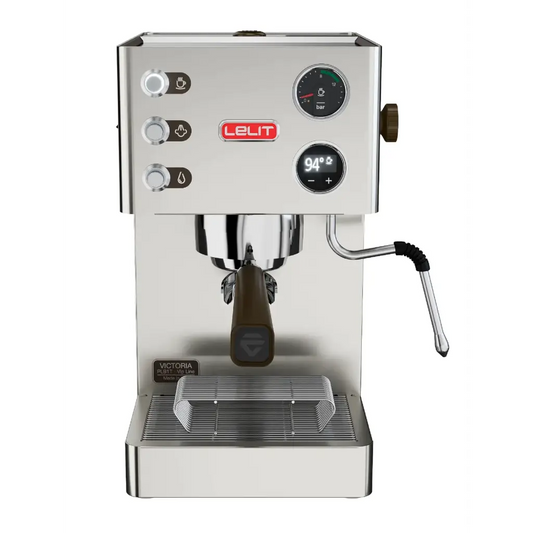
🇮🇹 Lelit — Italian Espresso EngineeringLelit Victoria PL91T (or Elizabeth PL92T)58mm · brass boiler · Italian-made$1,799 (Victoria) · $2,899 (Elizabeth)Shop Lelit →
⚡ Di Pacci Verdict — Which to Buy?Choose the Breville Barista Pro ($1,049) if you want everything in one machine, value a 3-second heat-up for busy mornings, and prefer the simplicity of a single integrated unit with an LCD display and 30 grind settings. It's the right choice for beginners who want a straightforward, compact all-in-one. Choose a Lelit machine if you want a long-term espresso setup — 58mm commercial portafilter, brass boiler stability, full modular upgrade path (replace the grinder independently), and a machine designed to last and be serviced over a decade. The real decision: do you want a single appliance, or an espresso platform you'll grow with?
$750Price gap — Pro vs Victoria
54mm vs 58mmPortafilter size difference
2-YearWarranty on both brands
Both In StockDi Pacci — 5 Australian stores
In the Australian home espresso market, Breville and Lelit sit in a similar price range and appeal to overlapping buyers — but they come from completely different design philosophies. Breville optimises for integration, speed, and daily convenience. Lelit optimises for thermal stability, modular serviceability, and traditional Italian espresso engineering. Neither is objectively better; they're built for different users at different stages of the espresso journey.
Machine Profiles — What Each Approach Means in Practice
PID temperature control — independently adjustable; dual on the Elizabeth
Programmable pre-infusion — gradual puck saturation before full extraction pressure
58mm LELIT58 commercial group — café-standard portafilter, full accessory ecosystem
3-way solenoid valve — dry pucks, backflushing, professional workflow
Made in Italy — modular design, accessible components, long-term serviceability
1. Integrated Grinder vs Separate Grinder
This is the most practically important difference between Breville and Lelit — and the decision that shapes everything downstream.
Barista Pro — Integrated Grinder
Steel conical burr grinder built in — 30 grind settings
Grinds directly into the portafilter on demand — single footprint
No separate grinder, no bench clutter, simpler setup
Grinder cannot be upgraded independently — if you outgrow it, you replace the whole machine
Lower total cost to get started — one purchase covers both
Lelit — Dedicated External Grinder
No built-in grinder — pairs with any quality burr grinder
Grinder and machine can each be upgraded, replaced, or serviced independently
Total setup cost higher initially ($1,799 machine + $300–$1,500+ grinder)
Grinder quality ceiling is unlimited — from Baratza Sette to Niche Zero to Mazzer
Modular approach lets you invest in each component on its own timeline
⚙️ Grinder VerdictThe Barista Pro's integrated grinder is a genuine convenience advantage — one unit, one bench space, lower initial cost. The Lelit approach's advantage emerges over time: when your grinder limits your espresso quality, you upgrade it without replacing the machine. The grinder is arguably the most important variable in espresso quality — having the freedom to invest in a better one independently is a meaningful long-term benefit.
2. Heating System — ThermoJet vs Brass Boiler
Barista Pro — ThermoJet Thermoblock
3-second heat-up — the fastest of any machine at this price tier
Heats water on demand through the element as it flows
Ready to pull a shot almost immediately from cold
Less thermal mass means temperature can be slightly less stable during extended back-to-back sessions
Excellent for 1–2 shots quickly in a busy morning routine
Lelit — Brass Boiler
Victoria warms up in 3–5 minutes — still fast for a boiler machine
Brass provides superior thermal mass — holds temperature more consistently once at operating temp
Temperature more stable during extended extraction sessions or back-to-back drinks
PID maintains precise brew temperature throughout the session
Boiler components are accessible, replaceable, and serviceable independently
🌡️ Heating VerdictFor morning convenience, the Barista Pro's 3-second ThermoJet is unmatched — you're pulling a shot before the Lelit has finished warming up. For shot-to-shot temperature consistency over an extended session, the Lelit's brass boiler holds a small edge. In everyday home use (1–4 shots), the practical difference is minor. The ThermoJet is a genuine advantage for busy mornings; the boiler is a genuine advantage for serious espresso dialling-in.
3. Portafilter Size — 54mm vs 58mm
Barista Pro — 54mm Portafilter
High-quality stainless 54mm portafilter — Breville's standard across the Barista range
Works well with Breville's own filter baskets and accessories
Compatible with some 54mm aftermarket baskets (VST, IMS)
Narrower accessory ecosystem than 58mm commercial standard
Compatible with VST, IMS, and all major precision basket brands
Better heat retention relative to narrower portafilter formats
Coffee Slide spout (Lelit exclusive) lays flat for tamping — no tamping mat needed
☕ Portafilter VerdictFor beginners, the 54mm vs 58mm distinction is rarely felt. Over time, the 58mm commercial standard opens access to a vastly wider range of precision accessories — better baskets, scales, tampers, distributor tools — that help you push espresso quality higher. If you plan to invest in your setup over years, the 58mm Lelit gives you a much longer runway.
4. Long-Term Serviceability
This is where the two philosophies diverge most clearly over multi-year ownership.
Breville Barista Pro
2-year warranty — strong coverage
Integrated electronics and thermoblock mean fewer individually replaceable parts
Excellent during warranty; less modular if individual components fail after
Di Pacci services Breville machines in-house across all five locations
When the machine reaches end-of-life, the integrated grinder goes with it
Lelit
2-year manufacturer warranty
Modular design — boiler, pump, valves, and group head individually replaceable
Di Pacci is an authorised Lelit dealer with genuine spare parts stocked on-site
Machines regularly serviced and used at 10–15+ years in Australian homes
When you upgrade, machine and grinder can be upgraded separately on your timeline
🔧 Serviceability VerdictBoth machines are serviceable by Di Pacci. The Lelit's modular design means individual components (boiler, pump, solenoid) can be replaced rather than the whole machine — making it more attractive for long-term ownership. Buyers who want a machine they'll still be using in 8–10 years generally gravitate toward Lelit. Buyers who want confidence through warranty and aren't planning a decade of ownership find the Breville more practical.
Full Comparison — Barista Pro vs Lelit Victoria vs Lelit Elizabeth
Feature
Breville Barista Pro
Lelit Victoria PL91T
Lelit Elizabeth PL92T
Price
$1,049
$1,799
$2,899
Origin
🇦🇺 Australia (Breville)
🇮🇹 Made in Italy (Lelit)
Grinder
Built-in · 30 settings
External required
Heating System
ThermoJet — 3 seconds
Brass boiler — 3–5 min
Dual brass boilers — 10–15 min
Boiler Configuration
Thermoblock
Single boiler 300mL
Dual boiler 300+600mL
Simultaneous Brew+Steam
No
No
✓ Yes
Portafilter Size
54mm
58mm (commercial)
58mm (commercial)
PID Temperature Control
Single PID · LCD
Single PID · OLED LCC
Dual independent PID · OLED LCC
Pre-Infusion
Low pressure · built-in
Programmable on/off
Fully programmable
Shot Control
Volumetric auto-stop
Manual lever
Timed volumetric auto-stop
Built-In Shot Timer
LCD display
No
✓ Yes
Portafilter Accessory Range
Limited (54mm)
Extensive (58mm)
Extensive (58mm)
Upgrade Path
Limited — integrated
Modular — full
Modular — full
Serviceability
Good
Excellent — long-term
Excellent — long-term
Pump
15-bar Italian vibratory pump — all three
Water Tank
2L
2.7L
2.5L
Warranty
2 years — all three
Lelit Range — Which Model to Compare Against the Barista Pro
The live blog compares the Barista Pro against "Lelit" generically. At Di Pacci, three Lelit models are most commonly considered alongside the Barista Pro:
Lelit Victoria PL91T$1,799 (was $2,199)
Closest Lelit to the Barista Pro in price and target buyer. Single boiler, PID, programmable pre-infusion, 58mm. Requires separate grinder. Di Pacci's most recommended first Lelit machine.
Lelit's entry point — PID, 58mm, Italian-built. More comparable to the Barista Pro in price when grinder budget is added. Ideal first step into the Lelit ecosystem.
The core difference is design philosophy. Breville (Barista Pro) is an all-in-one machine — grinder, brewer, and frother integrated into a single compact unit with a 3-second ThermoJet heat-up. It prioritises speed, convenience, and minimal setup. Lelit machines are traditional Italian espresso setups — separate machine and grinder, brass boilers, 58mm commercial portafilter, and a modular design engineered for long-term ownership and serviceability. They suit different users: Breville for everyday convenience, Lelit for the home barista who enjoys the craft and wants an upgrade path.
Neither is objectively better — they're optimised for different users. The Barista Pro ($1,049) wins on convenience: built-in grinder, 3-second heat-up, simpler setup, lower entry cost. The Lelit Victoria ($1,799) wins on long-term value: 58mm commercial portafilter, brass boiler stability, modular upgrade path, and Italian engineering built to last 10+ years. If you add a quality grinder to the Barista Pro's cost, the price gap narrows significantly — and the Lelit setup delivers better shot quality at that combined budget.
Yes — Lelit machines don't include a built-in grinder. You'll need to pair with a dedicated burr grinder. Di Pacci's commonly paired options include the Baratza Sette 270 ($649), the Niche Zero ($1,499), or the more accessible Baratza Encore ESP. The grinder is arguably the most important variable in espresso quality — and having a dedicated standalone grinder (vs integrated) means you can upgrade it independently as your palate develops, without replacing the whole machine.
The Breville Barista Pro heats up in 3 seconds via ThermoJet — the fastest of any machine at this price tier. The Lelit Victoria takes approximately 3–5 minutes from cold to operating temperature — still fast for a boiler machine. In a time-pressured morning, the Barista Pro's ThermoJet is a genuine practical advantage. The Lelit's brass boiler delivers more stable shot-to-shot temperature consistency once it's at operating temperature.
The portafilter size determines which accessories are compatible with your machine. 58mm is the café and commercial standard — meaning the widest range of precision baskets (VST, IMS), tampers, puck screens, distributors, and naked portafilters are available. Lelit's 58mm portafilter opens access to the full professional accessory ecosystem. The Barista Pro's 54mm works well with Breville's own accessories but has a narrower aftermarket range. For most beginners, the difference is minor; for enthusiasts who invest in precision accessories over time, 58mm offers significantly more options.
Both the Breville Barista Pro and Lelit machines come with a 2-year warranty when purchased from authorised Australian retailers such as Di Pacci. All purchases are also protected under Australian Consumer Law. Di Pacci provides in-house warranty service for both Breville and Lelit — with genuine parts for both brands stocked at our Sydney Roselands workshop. Call (02) 9758 0760 for service enquiries.
It depends on your budget and how involved you want to be. For a simple, fast, all-in-one setup: the Breville Barista Pro ($1,049) is excellent. For a more invested first setup with a separate grinder: the Lelit Anna PL41TEM ($999) + a Baratza Encore ESP (~$400) gives better long-term espresso quality for a similar total spend. For those ready to invest properly from the start: the Lelit Victoria ($1,799) + quality grinder is Di Pacci's most recommended entry into genuine prosumer espresso. Call us on (02) 9758 0760 for personalised advice.
About the AuthorMik Di Pacci — Founder & CEO, Di Pacci Coffee Company
Di Pacci has been supplying, installing, and servicing both Breville and Lelit machines in Australian homes since 2008. Authorised Lelit dealer with certified in-house technicians and genuine spare parts for both brands across five Australian showrooms. Call (02) 9758 0760 for advice before you buy.
Both Breville and Lelit In Stock at Di Pacci2-year warranty · 5 Australian stores · free shipping over $200 · Afterpay & Zip · same-day dispatch before 2PM · (02) 9758 0760