Best Espresso Machine Australia 2026: 9 Picks for Every Budget
July 2, 2026
Di Pacci — Expert Buying Guide · Australia · Updated August 2026
Best Espresso Machine Australia 2026 — 9 Picks for Every Budget
✍️ By Mik Di Pacci · Founder & CEO, Di Pacci Coffee Company · Selling & servicing espresso machines since 2003
Finding the best home espresso machine in Australia comes down to one question most buyers skip: what kind of boiler do you actually need? We've reviewed hundreds of machines across every budget. This guide covers 9 of the best — from a first machine under $500 to the dual boiler endgame — with honest pros, cons, and our real-world Di Pacci verdict for each one.
⚡ Quick Answer — Best Espresso Machine Australia 2026Best first machine: Breville Bambino Plus — 3-second heat-up, auto milk, compact. Best heat exchanger: ECM Technika V Profi PID — simultaneous brew and steam, E61, PID. Best dual boiler: ECM Synchronika — rotary pump, independent PIDs, built to last. Best all-in-one prosumer: Meraki Espresso Machine — dual boiler, rotary pump, integrated grinder + scales. Best compact single boiler: Rancilio Silvia V6 — commercial brass group, 58mm, made in Italy since 1926.
9 PicksEvery budget covered
4 Boiler TypesSingle · HX · Dual · Auto
Since 2003Di Pacci selling & servicing
5 StoresSee any machine in person
The 4 Boiler Types — Understand These First
The single biggest decision when buying an espresso machine isn't the brand — it's the boiler type. It determines whether you can brew and steam at the same time, how stable your temperature is, and how the machine fits your daily coffee routine.
☕EntrySingle Boiler
One boiler for both brew and steam. Brew first, wait 30–60 sec for steam. Most affordable format. Ideal for 1–2 coffees at a time and learning technique. Best for espresso-focused households.
♨️Mid-RangeHeat Exchanger (HX)
One boiler at steam temp, water piped through for brewing. Brew and steam at the same time. Classic E61 group. Perfect for daily milk drinks without dual boiler pricing.
🔥ProsumerDual Boiler
Two independent boilers — one for brew, one for steam — each with its own PID. Best temperature stability. Simultaneous operation. The endgame format for serious home baristas.
🤖ConvenienceAuto Bean-to-Cup
Grind, dose, tamp, brew at one touch. No portafilter. One-touch convenience over manual control. Perfect for offices and households where speed and simplicity beat hands-on ritual.
💡 Di Pacci's Honest TakeMost buyers over-focus on brand and under-focus on boiler type. Work out how you actually make coffee first, then shortlist brands second. A well-chosen HX machine will make more people happy, more of the time, than a prestige badge on the wrong format. And whatever machine you choose — budget for a proper burr grinder alongside it. The grinder impacts espresso quality more than almost any other component.
How to Choose — 4 Questions
How do you drink your coffee?Mostly espresso or long blacks? Single boiler is plenty. Milk drinks every day? Heat exchanger or dual boiler so you're not waiting on steam.
How many drinks in a row?One or two at a time? Single boiler. Several back-to-back for a household? HX or dual boiler — simultaneous operation makes a real difference.
How hands-on do you want to be?Love the ritual and want control? Traditional portafilter machine. Want coffee with zero fuss? Bean-to-cup is built for you.
What beans will you use?Darker blends are forgiving on any format. If you love light, single-origin coffee, temperature precision of a dual boiler pays off significantly.
☕ Entry-Level — First MachineSingle boilers, all-in-ones — real espresso without the complexity
⭐ Best First MachineBreville Bambino Plus
⚡ 3-Second Heat-Up🥛 Auto Milk Wand🏠 Compact🇦🇺 Designed in Australia
The machine we point most first-timers toward. The ThermoJet system reaches brew temperature in around 3 seconds, and the automatic milk texturing wand produces silky microfoam for flat whites and lattes with almost no learning curve. Compact enough for the smallest kitchen, pulls a genuinely good shot straight out of the box, and gives new home baristas an easy, forgiving path into real espresso.
Di Pacci verdict: "If you're buying your first proper espresso machine and you make milk drinks, this is the one we recommend more than any other. It punches well above its size and it's forgiving while you learn."
⚙️ Integrated Grinder🎯 Assisted Tamping🏠 One Appliance
If you'd rather buy one appliance that does everything, the Barista Express Impress builds a conical burr grinder straight into the machine, with assisted dosing and auto-tamping to guide you toward a consistent puck. The most self-contained way to get from beans to espresso on a single bench. Not as capable as a separate machine and grinder at the same budget — but the convenience is genuine and coffee quality is good.
Di Pacci verdict: "The Impress dosing system takes a lot of the guesswork out of your first months. A great choice if you want one box that does it all — just know a dedicated grinder still edges it on ultimate quality."
🔵 58mm Commercial Group🇮🇹 Made in Italy🕰️ Built to Last4 Colours
The benchmark home single-boiler since 1997, and the machine serious learners still buy to understand real espresso. The Silvia V6 puts genuinely commercial-grade components into a compact home body — a chrome-plated brass 58mm group head identical to Rancilio's café machines, a 300ml lead-free brass boiler, and a 3-way solenoid valve. Available in Stainless Steel, Matte Black, Matte White, and Sage Green. From $1,445.
Di Pacci verdict: "We still service Silvias from decades ago — that tells you everything. It rewards technique and lasts a lifetime. Pair it with a proper grinder and it punches far above its size."
♨️ Mid-Range — Heat ExchangerSimultaneous brew and steam · E61 group · Built to last
⭐ Best Heat ExchangerECM Technika V Profi PID
🔧 E61 Group Head♨️ Heat Exchanger🌡️ PID Control🇩🇪 German Build
A benchmark heat exchanger machine — an E61 group head for thermal stability, PID temperature management for repeatability, and the ECM stainless build that lasts decades. You can brew and steam simultaneously, making it effortless to work through a round of milk drinks. The natural step up from entry-level for anyone making flat whites, lattes, or cappuccinos every day.
Di Pacci verdict: "For a lot of customers, this is the machine they should have bought first. Simultaneous brew and steam plus PID stability is a genuine step change in daily use."
🔧 E61 Group Head♨️ Heat Exchanger🌡️ PID Control🇩🇪 German Build
Profitec's take on the ideal home heat exchanger — E61 group, PID-managed temperature, and a clean stainless design built to be serviced and kept for years. Like the Technika, it brews and steams simultaneously, and Profitec's build quality means this machine will still be producing outstanding coffee a decade from now.
Di Pacci verdict: "Enthusiasts who want German-built HX quality with modern PID control and a machine that will still be pulling shots a decade from now — this is it."
♨️ Heat Exchanger🔧 E61 Group Head🌡️ Dual-Probe PID📐 Compact 220mm
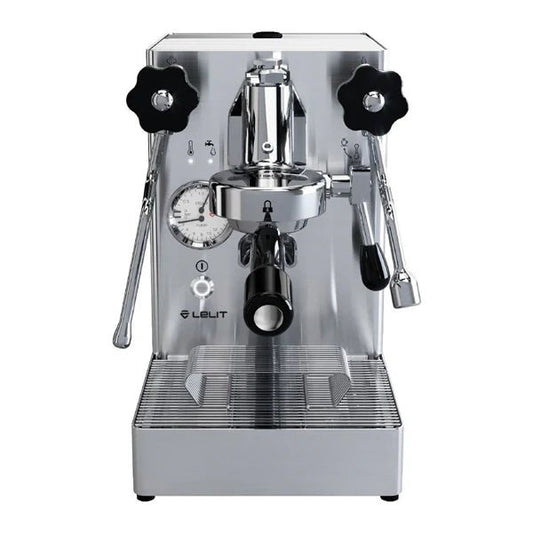
A genuine cult favourite among home baristas — the world's most compact E61 heat exchanger at just 220mm wide. Its patented dual-probe temperature system monitors both steam boiler and brew water simultaneously and adjusts the heating element in real time, eliminating the flushing ritual that most HX machines require. Simultaneous brew-and-steam, compact footprint, no flush needed. Also note: the Mara X3 (with Pagaia flow control) is now available — see our full review.
Di Pacci verdict: "The MaraX earns its cult status. The dual-probe system means no flush routine and rock-steady temperature in a 220mm-wide body. Our top compact HX pick."
Di Pacci's own machine — built to be the all-in-one prosumer setup we'd want ourselves. Two independent boilers for simultaneous brewing and steaming, a commercial-grade rotary pump for stable pressure and quiet operation, an integrated grinder, and built-in 0.1g precision scales — everything from dose to extraction lives in one footprint. Backed directly by Di Pacci's in-house service team.
Di Pacci verdict: "This is our own machine — dual boiler, rotary pump, integrated grinder and scales in one. It removes the guesswork and the bench clutter. For buyers who want a complete prosumer setup without assembling three components."
🔥 Dual Boiler🔧 E61 Group Head🔇 Rotary Pump🚰 Plumb-In Capable
The machine people buy once. Full stainless construction, E61 group head, dual stainless boilers with independent PIDs, and a quiet rotary pump that delivers more consistent pressure with less noise than a vibration pump. Built to run for decades with proper maintenance. Produces espresso with a depth and clarity that steps well beyond entry-level — plumb-in capable for a permanent water line connection.
Di Pacci verdict: "This is the machine people buy once. The rotary pump alone — quieter, more consistent, more durable — changes the daily experience. Pair it with a serious grinder and it's genuinely café-grade at home."
🔥 Dual Boiler🌡️ PID Control📐 Compact 255mm🇩🇪 German Build
The most accessible entry into a true dual boiler. A dedicated brass brew boiler and separate stainless steam boiler with PID control — independent temperature management and simultaneous brew-and-steam in a compact 255mm-wide body. For buyers who want dual boiler precision without the flagship footprint or price, the Pro 300 is the value pick of the segment — and it's German-built to last.
Di Pacci verdict: "The Pro 300 delivers the core dual boiler advantage — independent PID brew and steam — in a compact, well-priced package. Smart choice if you want the format's precision without stretching to a flagship."
⚠️ Don't Forget the GrinderThe most common mistake: spending everything on the machine and pairing it with a cheap grinder — then wondering why the espresso disappoints. The grinder influences espresso quality more than almost any other component. Whatever machine you choose, budget for a proper burr grinder alongside it. Read our dedicated guide: Best Coffee Grinder for Espresso in Australia (2026) →
Frequently Asked Questions
It depends on how you drink your coffee. For a first machine — especially for milk drinks — the Breville Bambino Plus is our most-recommended pick thanks to its 3-second heat-up and automatic milk texturing. For daily flat whites with simultaneous brew-and-steam, the ECM Technika V Profi PID heat exchanger is a standout. For end-game precision, the ECM Synchronika dual boiler is among the best you can buy for the home. For an all-in-one prosumer setup, the Meraki Espresso Machine combines dual boiler, rotary pump, integrated grinder, and scales.
Choose a single boiler if you mostly drink espresso or make 1–2 milk drinks at a time and want the most affordable real-espresso machine. Choose a heat exchanger if you make milk drinks daily and want to brew and steam at the same time — the E61 Lelit MaraX, ECM Technika, and Profitec Pro 400 are strong picks. Choose a dual boiler if you want the most temperature-stable, precise shots — ideal for light and single-origin roasts and high-volume milk households.
A dedicated burr grinder almost always outperforms a built-in one and gives you the flexibility to upgrade later. All-in-one machines like the Breville Barista Express Impress are convenient and space-saving, but if ultimate shot quality matters, pair a traditional machine with a standalone grinder. The grinder influences espresso quality more than almost any other single component. Read our Best Coffee Grinder for Espresso guide for recommendations at every budget.
It depends on construction and maintenance. Well-built E61 heat exchanger and dual boiler machines from ECM, Profitec, Lelit, Rancilio, and Bezzera are designed to be serviced and can last well over a decade — many Di Pacci customers still bring in machines from the early 2000s. Compact thermocoil machines like the Bambino Plus deliver excellent value but have a shorter service life. Di Pacci services every machine we sell through our in-house workshop in Sydney.
The Breville Bambino Plus is the best first machine under $700 — 3-second heat-up, automatic milk texturing, compact. For buyers who want everything in one box, the Breville Barista Express Impress (under $1,000) includes an integrated grinder and auto-tamping. For buyers who want to grow into serious espresso with a machine that lasts, the Rancilio Silvia V6 at $1,445 is worth the extra investment — its commercial brass group and 3-way solenoid are built to last decades.
The Lelit Mara X (PL62X) remains an outstanding compact HX machine — its dual-probe PID system and 220mm width make it uniquely capable. However, the new Lelit Mara X3 (PL62X3) is now available from Di Pacci, adding Pagaia electronic flow control as a built-in standard feature, a quieter pump, and an improved steam nozzle at $3,399 AUD. If you're buying new in 2026, the Mara X3 is the recommended choice — see our full Mara X3 review.
Yes — Di Pacci has five showrooms across Australia (Sydney/Roselands, Melbourne, Queensland, Perth, Port Macquarie) where you can see and test machines in person. Call (02) 9758 0760 and our team will help you match a machine to how you actually make coffee, and recommend the right grinder to pair with it. Finance options including Afterpay, Zip, and Klarna are available across all machines.
About the AuthorMik Di Pacci — Founder & CEO, Di Pacci Coffee Company
Mik Di Pacci is the Founder & CEO of Di Pacci Coffee Company, Australia's largest coffee machine specialist. In coffee since 2003, with five showrooms across Sydney, Melbourne, Queensland, Perth, and Port Macquarie, plus an in-house roastery, barista training school, and service workshop. Di Pacci has sold and serviced every machine in this guide, and all recommendations are based on direct experience.
Shop Australia's Largest Range of Home Espresso MachinesFree shipping over $200 · 5 showrooms · Finance available · Expert grinder matching · In-house servicing · (02) 9758 0760





1 comment
George Grossman
Which machine has both a rotary pump and PID controller?