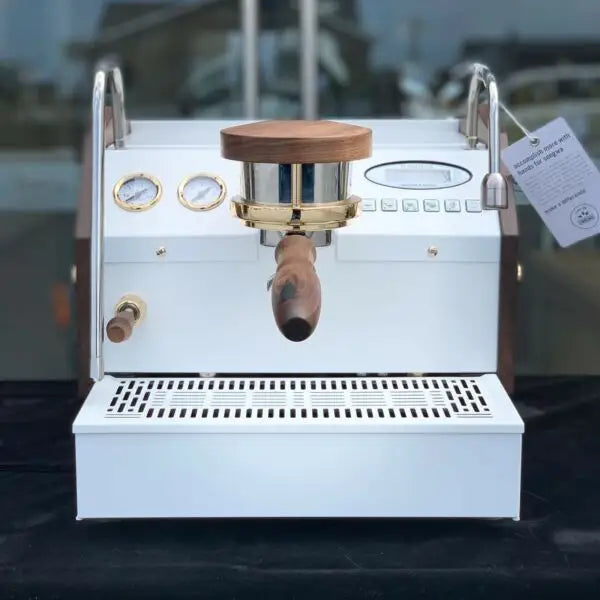
How to Choose a Home Coffee Machine in Australia

February 11, 2025


2026 Buyer's Guide · Australia · Di Pacci

How to Choose the Right Home Coffee Machine in Australia (2026 Buyer's Guide)

✓ Updated June 2026 · ~12 min read · Di Pacci

Quick Answer

To choose a home coffee machine in Australia, start with how many coffees you make a day and whether you want to learn the craft or just press a button. 1–2 coffees a day → a single boiler (e.g. Rancilio Silvia V6, from $1,395). 3–5 milk drinks a day → a heat exchanger, which brews and steams at once (e.g. Rocket Appartamento, $3,395, or the entry-level Bellezza Gulia, from $2,699). Maximum precision and volume → a dual boiler (e.g. Bellezza Francesca, from $3,499, up to the La Marzocco GS3). Budget for the complete setup — machine plus a quality burr grinder — never the machine alone. A realistic minimum for good home espresso is around $1,800–$2,200 all-in.

Australia has one of the most sophisticated coffee cultures in the world, so the bar for a "good coffee" at home is high. The right machine turns your morning into a café-quality ritual; the wrong one means years of compromised results and an expensive machine gathering dust. Di Pacci has helped Australians choose, use, and service coffee equipment since 2008 — stocking everything from the $1,395 Rancilio Silvia to the $16,499 La Marzocco GS3. This guide is honest, practical advice based on real-world use.

The most important thing to understand: the grinder matters as much as the machine — arguably more. A quality burr grinder on a mid-range machine will consistently outperform a cheap grinder on a premium machine. Always budget for both.

200+
Machines in Stock
15+
Years Experience
5
Australian Stores
5,000+
Products Available

5 Questions to Ask Yourself Before You Buy

Answer these five questions honestly before comparing specs — they'll eliminate most of the market immediately and point you to the right category.

1. How many coffees do you make per day?

1–2 coffees daily suits a single boiler perfectly. 3–5 daily — especially milk drinks back-to-back — points strongly to a heat exchanger or dual boiler, which let you brew and steam at the same time without waiting for the boiler to switch modes.

2. Do you want to learn the craft, or just get coffee quickly?

If you enjoy the process — grinding, dosing, tamping, extracting — a semi-automatic machine gives full control and a real skill ceiling. If you want great coffee with minimal effort, a bean-to-cup (super-automatic) machine handles everything at the press of a button. Neither is wrong; they serve different people.

3. What is your realistic total budget?

Budget for the complete setup — machine, grinder, and basic accessories — not just the machine. The grinder is not optional for a semi-automatic. A realistic minimum for good home espresso is $1,800–$2,200 all-in (machine + grinder + tamper + scales).

4. How much bench space do you have?

Machines are larger than they look in photos. A heat exchanger typically measures 350–400mm wide, 300–380mm deep, and 350–450mm tall — plus the grinder beside it. Measure your bench and under-cabinet clearance before falling for a machine that won't fit.

5. How important is long-term serviceability?

Premium machines from established brands (Rancilio, Bellezza, ECM, Rocket, La Marzocco, Lelit) can be serviced and maintained for 20+ years. Cheap generic machines may have no parts after 2–3 years. Di Pacci services all brands we sell — an important consideration for a significant investment.

Types of Home Espresso Machines — Which Is Right for You?

Most Popular for Enthusiasts

Semi-Automatic

You control grind, dose, tamp, and extraction; the machine provides consistent 9-bar pressure and temperature. Needs a separate grinder. Real craft and a genuine quality ceiling. e.g. Rancilio Silvia V6, Bellezza Bellona, Rocket Appartamento, ECM Synchronika.

Convenience First

Bean-to-Cup (Super-Automatic)

Grinds, tamps, brews, and cleans automatically — one button, one coffee. No separate grinder. Consistently good, if not café-perfect. e.g. DeLonghi Magnifica Evo, Jura E4, Philips LatteGo 3200.

All-in-One Entry

Machine with Built-in Grinder

Semi-automatic with an integrated grinder — fresh grind each shot, but manual tamp and extraction. Good entry point; the grinder caps quality, but you can upgrade later. e.g. Breville Barista Express, Sage Barista Pro.

Purist Choice

Manual / Lever Machine

You generate extraction pressure by hand. Maximum control, steep learning curve, no pump noise — exceptional espresso in experienced hands. e.g. La Pavoni Europiccola, Flair Espresso, Cafelat Robot.

Boiler Types Explained — The Most Important Technical Decision

The boiler configuration determines how your machine handles temperature and whether you can brew and steam at the same time. It's the single most important spec to understand before choosing.

Boiler Type How It Works Brew + Steam at once? Temp Precision Best For Price Range
Single Boiler (SB) One boiler switches between brew and steam temps — wait 30–60s between modes. No Good — especially with PID Beginners, 1–2 coffees $1,000–$2,500
Heat Exchanger (HX) One steam boiler with a tube running brew water through it — brew and steam together. Yes Very good — short flush before each shot Enthusiasts, 3–5+ coffees, milk drinks $2,500–$5,000
Dual Boiler (DB) Two independent boilers — one for brew, one for steam. No compromise. Yes — fully independent Exceptional — both PID-controlled Dedicated baristas, high volume $3,500–$16,000+

Our recommendation for most buyers: a heat exchanger gives the best balance of performance, convenience, and value — brew and steam at once without the cost of a dual boiler. For most households making 3–5 coffees a day, an HX machine like the Rocket Appartamento or Bellezza Gulia is the sweet spot.

Key Features to Look For

PID Temperature Control

Holds brew water at a precise, stable temperature. Without it, temperature fluctuates and extraction suffers. Non-negotiable for a serious setup — standard on most machines above $1,500.

Pre-Infusion

Gently saturates the puck at low pressure before full 9-bar extraction. Reduces channelling for a sweeter, more even shot. Common on mid-range and premium machines.

Pump Type

Vibratory pumps are standard — effective but noisier. Rotary pumps are quieter, smoother, and longer-lasting, found on most HX and dual boilers above $3,000.

Group Head (E61)

The E61 group is the home-machine standard — thermally stable, easy to service, universal parts, with passive pre-infusion via its lever mechanism.

Build Quality

Look for stainless steel or brass boilers and solid steel panels. These machines last 20+ years and hold resale value. Avoid plastic structural components.

Tank vs. Plumbed

Most home machines use a 1.5–3L removable tank. Some premium machines can plumb directly into your water supply — handy for high-volume use, but most buyers are well-served by a tank.

Budget Guide — What to Expect at Every Price Point

Total Setup Budget Machine Category What You Get Grinder Budget Our Pick
$1,500–$2,200 Entry single boiler Commercial-grade parts, PID, reliable. Learning-focused. $300–$500 Rancilio Silvia V6 + Baratza Encore ESP
$2,200–$3,500 Entry HX or upgraded SB Simultaneous brew/steam, better build & steam power. $400–$600 Bellezza Bellona package (inc. grinder)
$3,500–$5,500 Mid-range HX Rotary pump, E61 group, café-quality daily. $500–$800 Rocket Appartamento + Eureka Mignon Specialita
$5,500–$8,000 Premium HX or entry DB Independent PID, programmable pre-infusion, pro build. $800–$1,200 Bellezza Francesca + Mazzer Mini E
$8,000+ Flagship / prosumer Commercial internals, handmade, 20+ year lifespan. $1,200–$2,000+ La Marzocco GS3 AV + Mahlkönig X54

5 Common Mistakes When Buying a Home Coffee Machine

1. Underspending on the grinder. A $2,000 machine and an $80 blade grinder is the most common home-coffee mistake. The grinder sets your quality ceiling — budget at least 30–40% of the machine's value for a quality burr grinder.

2. Buying for looks, not function. A beautiful machine that doesn't fit your workflow, volume, or skill level will frustrate you. The best machine suits how you actually make coffee — not the one that photographs best.

3. Ignoring total setup cost. The machine is only the start — add a grinder ($300–$1,500), tamper ($30–$150), scales ($50–$200), cleaning products (~$50/yr), and descaler (~$30/yr).

4. Skipping service & maintenance planning. Every machine needs cleaning, descaling, and periodic servicing. Machines bought from non-specialists often have no local service support. Di Pacci services every brand we sell across all five stores.

5. Overbuying for your skill level. A dual boiler with programmable pre-infusion takes skill to leverage. If you're new, a single boiler or HX will teach you more — and you can upgrade once your technique justifies it.

Recommended Home Coffee Machines by Tier

Entry-Level · Under $2,500
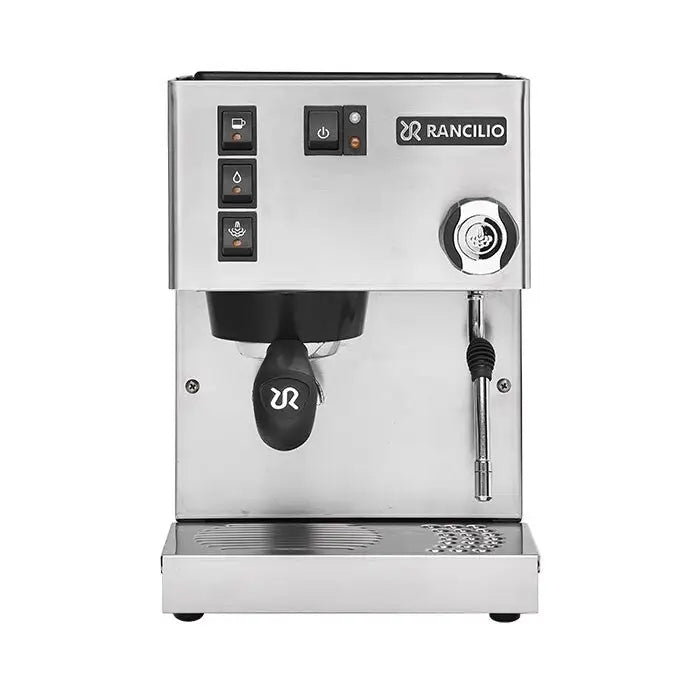
Rancilio Silvia V6 entry-level home espresso machine — Di Pacci Australia
World Classic

Rancilio Silvia V6 (2025)

From $1,395
  • Single boiler, commercial parts
  • 25+ years proven reliability
  • World's most popular home machine
  • Pairs with any quality grinder

View Machine →
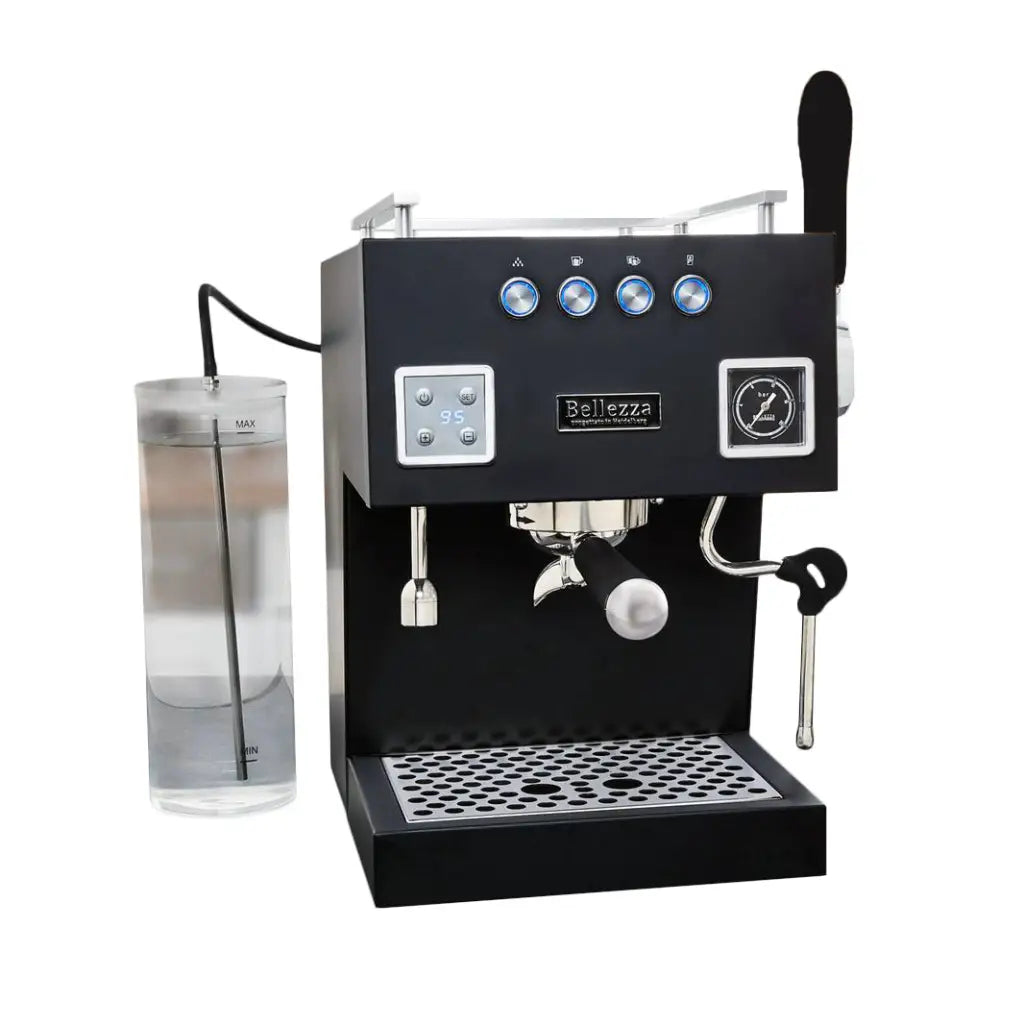
Bellezza Bellona home espresso machine with free grinder — Di Pacci Australia
Free Grinder

Bellezza Bellona + FREE Grinder

From $2,695
  • Single boiler with PID control
  • Quality grinder included
  • Complete setup, ready to go
  • Ideal first-machine package

View Machine →
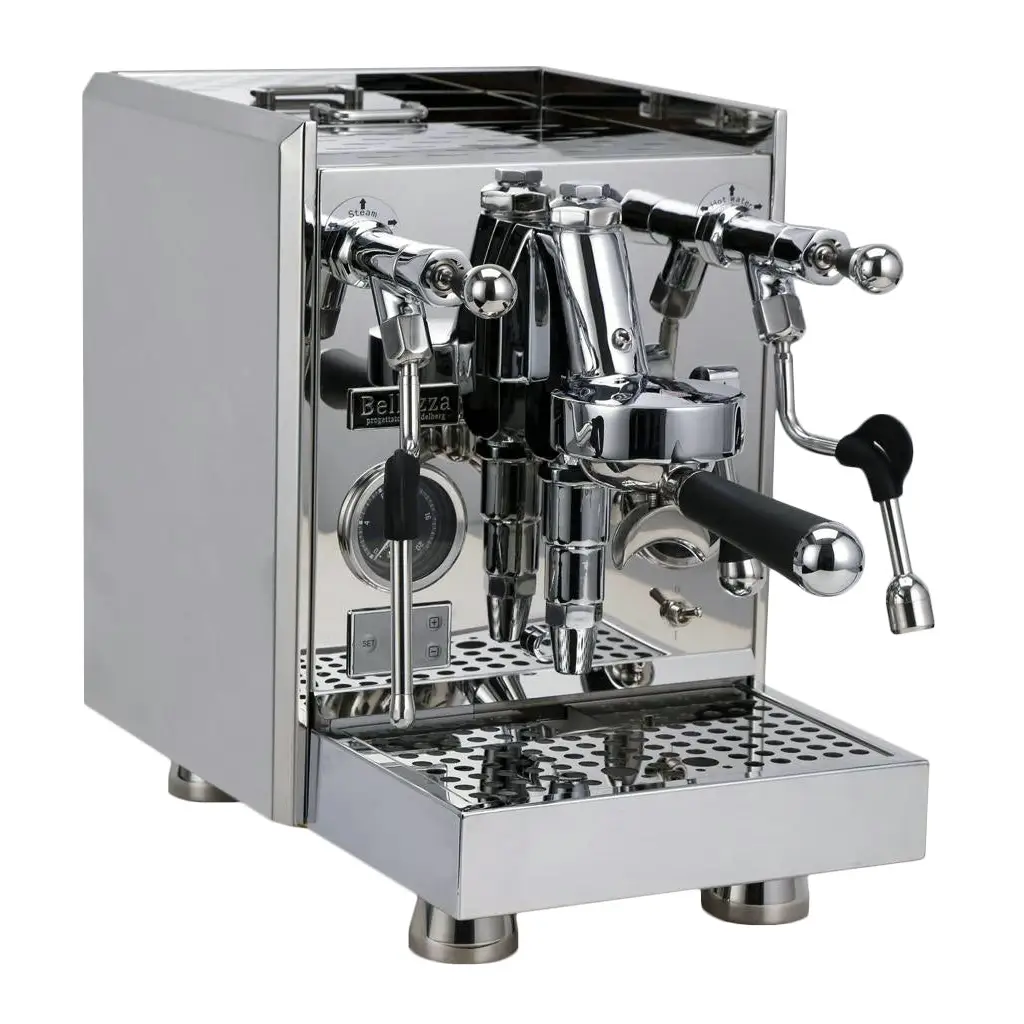
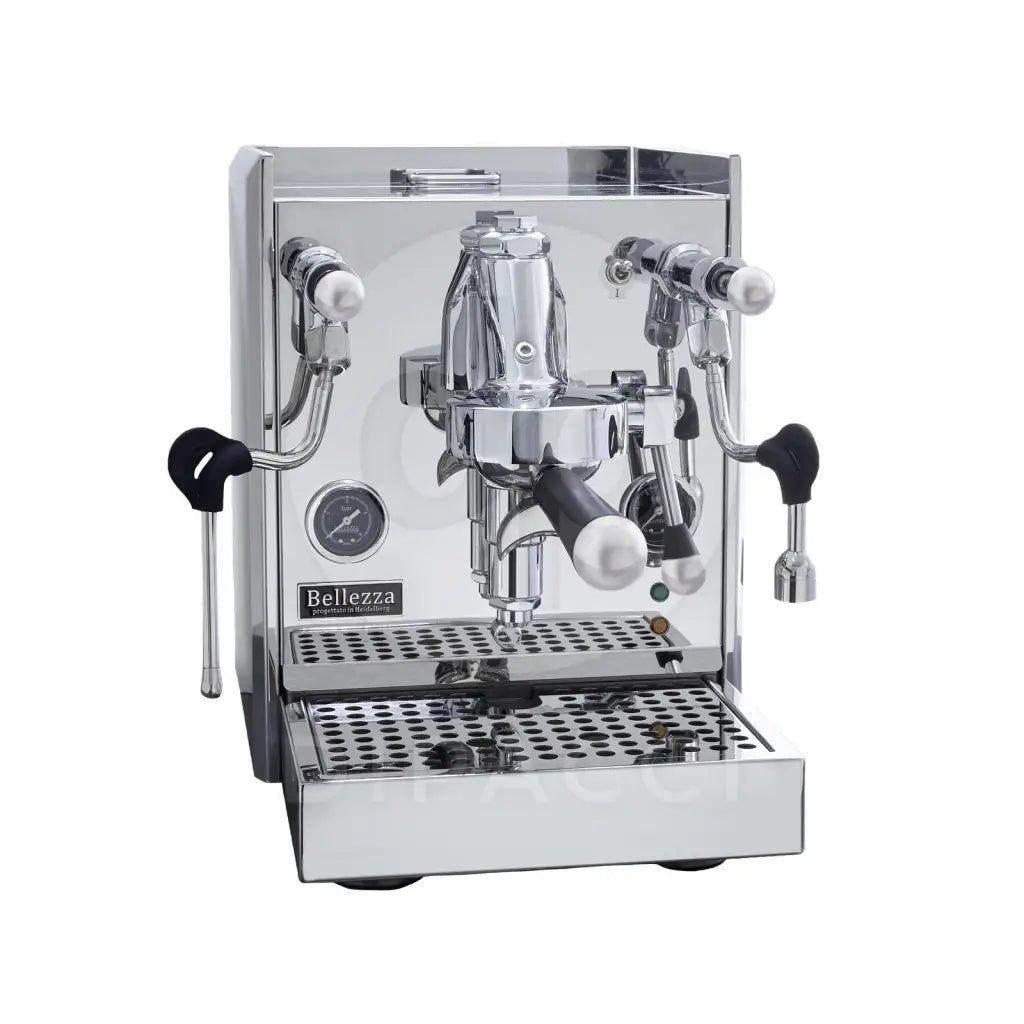
Bellezza Gulia entry heat exchanger home espresso machine — Di Pacci Australia
Best Value HX

Bellezza Gulia

From $2,699
  • Heat exchanger boiler
  • Commercial-style group head
  • Brew & steam simultaneously
  • Beginner-friendly workflow

View Machine →
Mid-Range · $2,500–$5,000
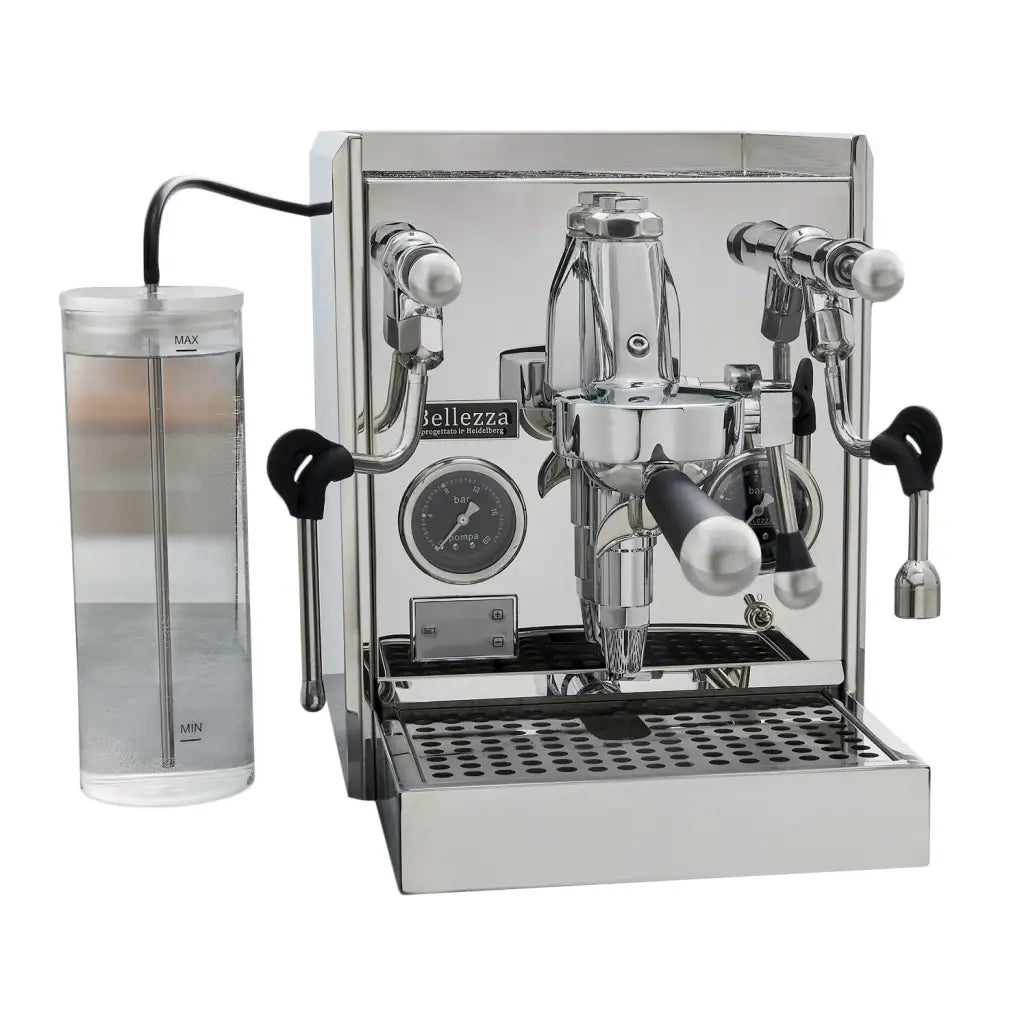
Bellezza Francesca dual boiler home espresso machine — Di Pacci Australia
Dual Boiler

Bellezza Francesca

From $3,499
  • Dual boiler system
  • Independent PID — both boilers
  • Programmable pre-infusion
  • Rotary pump · brew & steam at once

View Machine →
Bellezza Inizio R rotary home espresso machine — Di Pacci Australia
Rotary · Whisper Quiet

Bellezza Inizio R

From $3,999
  • Rotary pump — whisper quiet
  • PID + pre-infusion control
  • Heat exchanger boiler — 1.8L
  • Plumbable or tank — your choice

View Machine →
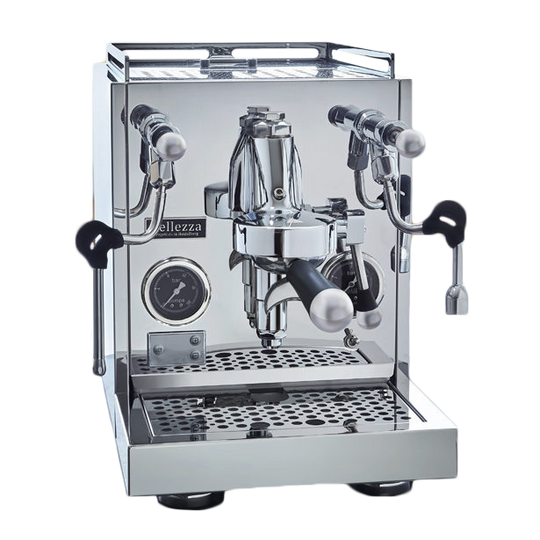
Bellezza Chiara compact heat exchanger home espresso machine — Di Pacci Australia
HX Compact

Bellezza Chiara

From $3,499
  • Heat exchanger boiler — 1.8L
  • PID + pre-infusion control
  • Premium build, compact footprint
  • Brew & steam simultaneously

View Machine →
Premium · $5,000+
Bellezza Valentina premium home espresso machine — Di Pacci Australia
Premium

Bellezza Valentina

$6,999 $8,750
  • Heat exchange boiler
  • Advanced PID control
  • Expert-grade steam wand
  • Hand-assembled in Germany

View Machine →
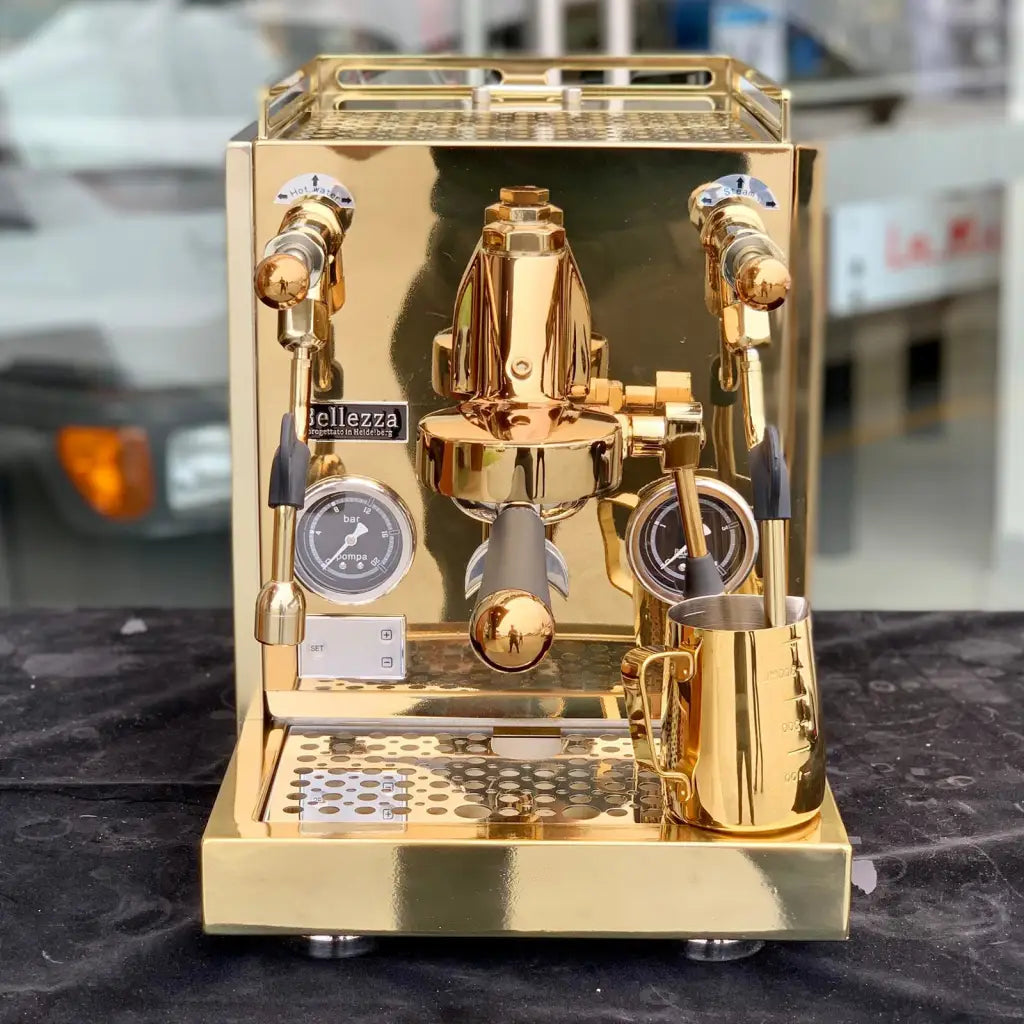
Bellezza Inizio Rotary 24K Gold premium home espresso machine — Di Pacci Australia
Art Object

Bellezza Inizio R 24K Gold

$5,999
  • 24-carat gold-plated finish
  • Rotary pump — silent operation
  • Heat exchanger boiler
  • PID + pre-infusion

View Machine →
La Marzocco GS3 AV flagship home espresso machine — Di Pacci Australia
Flagship

La Marzocco GS3 AV

$16,499 $19,000
  • Dual boiler — handmade in Florence
  • Commercial-grade components
  • Independent PID — both boilers
  • 20+ year lifespan

View Machine →

Not sure which tier fits you? Browse all home espresso machines, machine + grinder packages, or home grinders — or call the Di Pacci team for honest, non-pushy advice.

Frequently Asked Questions

Budget for the complete setup, not just the machine. A realistic minimum for good home espresso is $1,800–$2,200 all-in (machine + grinder + tamper + scales). Quality entry machines like the Rancilio Silvia V6 start at $1,395; mid-range heat exchangers run $2,500–$5,000; premium and flagship machines go from $5,000 up to $16,499. Always set aside 30–40% of the machine's value for a quality burr grinder.

Single boiler suits 1–2 coffees a day and brews then steams in sequence (a 30–60s wait between). Heat exchanger brews and steams at the same time — ideal for 3–5 milk drinks a day — and is the sweet spot for most households. Dual boiler gives independent, PID-controlled brew and steam temperatures for maximum precision and high volume. Most buyers are best served by a heat exchanger.

For a semi-automatic machine, yes — the grinder is not optional, and it sets your quality ceiling. A quality burr grinder on a mid-range machine will out-perform a cheap grinder on a premium machine. Budget at least 30–40% of the machine's value for the grinder, or choose a package like the Bellezza Bellona that includes a matched grinder.

A PID controller holds brew water at a precise, stable temperature. Without it, boiler temperature fluctuates and extraction becomes inconsistent. It's effectively non-negotiable for a serious setup, and is standard on most machines above $1,500.

Choose bean-to-cup (super-automatic) if you want great coffee at the press of a button with no learning curve — ideal for busy households. Choose semi-automatic if you enjoy the craft of grinding, tamping, and dialling in shots, and want a higher quality ceiling. Bean-to-cup trades a little ultimate quality for total convenience.

Premium machines from established brands (Rancilio, Bellezza, ECM, Rocket, La Marzocco, Lelit) can be serviced and maintained for 20+ years, and hold resale value. Cheap generic machines may have no available parts after 2–3 years. Regular cleaning, descaling, filtered water, and periodic servicing matter most. Di Pacci services every brand it sells across all five Australian stores.

Di Pacci stocks 200+ home machines from every major brand across five Australian showrooms — Sydney, Melbourne, Perth, Port Macquarie, and Queensland — plus online with fast nationwide shipping. All new machines carry full manufacturer warranty with in-house service and repairs. Shop all home machines →

Find the Right Machine & Start Brewing Better at Home

200+ machines in stock. Expert advice. Five Australian stores. Fast nationwide shipping and finance available. Our team is ready to help you choose.

Leave a comment