Top Espresso Machine Buying Guide for 2026 Australia
February 10, 2026
Di Pacci Coffee Company — Espresso Machine Buying Guide — Australia 2026
Espresso Machine Buying Guide — Australia 2026
✍️ By Mik Di Pacci · Founder & CEO, Di Pacci Coffee Company · Updated July 2026
Choosing the right espresso machine is one of the most consequential purchases a home barista or café operator makes. The machine type, boiler system, and budget all affect what you can achieve in the cup — and what you'll enjoy using every morning. This guide cuts through the jargon and covers every machine type, the features that actually matter, how to budget correctly including accessories, and our top picks for 2026 — all stocked at Di Pacci with Australian warranty and in-house service.
5Machine types covered
9 barTarget brew pressure
93°CIdeal brew temp
6Top picks for 2026
2yrAU warranty all picks
Step 1 — The Five Types of Espresso Machine
Every espresso machine falls into one of five categories. The right type depends on how much control you want over the brewing process, how much time you want to spend at the machine, and your starting skill level.
🔧Manual — Lever Machines
You generate and control extraction pressure by hand using a spring-loaded or direct-pressure lever. Produces exceptional results with the most nuanced pressure profiling available — but demands skill, consistency, and patience to master. Best for experienced purists.
Most Popular⚙️Semi-Automatic Machines
An electric pump handles pressure — you grind, dose, tamp, and manually start and stop the shot. Gives real control over extraction while keeping workflow manageable. The preferred choice for home baristas who want to learn and improve.
Adds volumetric or gravimetric dosing to the semi-automatic workflow — the machine stops the shot automatically once a set volume or weight is reached. Ideal in multi-barista café environments where consistency matters most.
One button grinds, tamps, and brews — all automatically. Sometimes froths milk too. Trade-off is reduced control over grind size, dose, and extraction. Excellent for offices or households where convenience outweighs barista involvement.
Use pre-dosed, sealed pods or capsules to brew a consistent result quickly with no grinder required. Convenient and mess-free, but flavour customisation is limited and the per-cup cost is significantly higher than grinding your own beans long-term.
💡 Quick RuleThe more control you want over flavour, the more manual involvement you want from your machine. If you want to learn and genuinely enjoy the process — go semi-automatic. If you want a great cup at the press of a button — go automatic or super-automatic. Be honest with yourself: the right answer saves you frustration.
Step 2 — Features That Actually Matter
Below is a plain-English breakdown of the features that genuinely affect espresso quality — and what to look for in each category. Target brew temperature is 90–96°C and target brew pressure is 9 bar.
Feature
Why It Matters
What to Look For
Boiler Type
Determines temperature stability and whether you can brew and steam simultaneously
Regulates boiler temperature in real time for precise, consistent extraction
Essential for light roasts and consistency. User-adjustable PID lets you tune for different coffees
Pump Type
Generates the pressure needed for espresso extraction
Vibratory pumps: affordable, slightly noisier, common in home machines. Rotary pumps: quieter, more durable, standard in commercial use
Steam Wand
Determines milk texturing quality for lattes, flat whites, and cappuccinos
A powerful articulating wand for manual microfoam. Automatic wands are easier for beginners but limit control and consistency
Built-In Grinder
Convenience — grinds fresh to order without a separate machine
Flat or conical burr (never blade). A standalone grinder will always outperform a built-in — but built-in is a good starting point
Portafilter Size
Determines compatibility with aftermarket accessories and baskets
58mm is the professional standard — widest accessory ecosystem. 54mm is common on Breville home machines and works well within that range
Pre-Infusion
Gently wets the puck before full pressure — reduces channelling and improves extraction evenness
Fixed pre-infusion is good. Adjustable or programmable pre-infusion gives more control, especially for lighter roasts
Build Materials
Affects durability, heat retention, and long-term reliability
Stainless steel exterior and brass or copper boiler/grouphead internals are the benchmark for longevity
Water Reservoir
Determines refill frequency between sessions
2L+ for home use. Plumb-in option useful for high-volume or commercial setups. Always use a water filter to reduce scale build-up
Key insight: Boiler type and PID control have the most direct impact on shot quality and repeatability. A pressure gauge and shot timer are also worth having — they give you the feedback needed to improve technique and diagnose extraction problems.
Step 3 — Setting a Budget (and Accessories to Include)
Espresso machines range from under $300 to well over $5,000. One often-overlooked rule: budget 20–30% on top of your machine cost for a quality grinder and accessories — the grinder is responsible for approximately 70% of what determines flavour in the cup.
$200–$500Entry Level
Basic semi-automatic or automatic machines. Good for learning fundamentals. Expect single boiler, basic steam wand, and limited temperature control. A solid starting point before upgrading.
$500–$1,500Sweet Spot — Best Value
PID temperature control, better steam wands, more durable construction. Some models include built-in grinders or auto-tamping. The best value tier for a serious home barista — machines in this range last many years.
$1,500+Premium
Dual boilers, rotary pumps, flow control paddles, and commercial-grade group heads. Machines built to last a decade or more, producing café-quality espresso with the right skill and beans.
Essential Accessories to Budget For
⚙️
Burr Grinder — Non-Negotiable
The single most important purchase alongside your machine. A quality burr grinder with stepless or fine-step adjustment is essential for consistent espresso. Budget $150–$500+ depending on volume and quality goals.
A portafilter scale (0.1g precision) removes guesswork from dosing. A calibrated 58mm tamper ensures even pressure across the puck. Budget $20–$80 each.
A 350–600ml stainless steel jug for microfoam and a knock box for puck disposal. Two items you'll use every single session. Budget $15–$40 each.
💧
Water Filter and Descaler
Hard water is the leading cause of boiler and group head damage. An inline or reservoir filter dramatically extends machine life and protects flavour quality. Always descale on schedule.
💰 Budget tip: If you have $1,000 total, consider spending $600 on the machine and $350–$400 on a dedicated grinder rather than spending $1,000 on the machine alone. The grinder upgrade will have a more noticeable impact on cup quality than spending more on the machine.
Step 4 — Maintenance and Care
An espresso machine is a precision appliance pushing hot pressurised water through coffee multiple times a day. Regular maintenance directly affects both coffee quality and machine longevity.
📅 Daily
Water backflush after each session
Wipe steam wand immediately after use
Empty drip tray and knock box
Rinse portafilter and basket
📆 Weekly
Chemical backflush with Cafetto
Soak baskets in detergent solution
Remove and scrub shower screen
Wipe down water reservoir
📋 Monthly
Descale the boiler circuit
Replace water filter cartridge
Deep clean group head gasket area
Check steam tip for blockages
🔧 Annually
Group head gasket replacement
Boiler and solenoid inspection
Professional service recommended
Di Pacci service all brands we sell
Use filtered water always. Hard tap water causes scale build-up that damages boilers and affects flavour. A water filter or softening filter is one of the best investments for machine longevity. Buy freshly roasted beans at Di Pacci — always grind to order. And if you want to improve your technique fast, Di Pacci's barista training courses cover everything from dialling in to latte art.
Step 5 — Top Espresso Machine Picks for 2026
These six machines represent the best in their respective categories based on performance, real-world reliability, value for money, and service availability in Australia. Every machine below is in stock at Di Pacci with full Australian warranty.
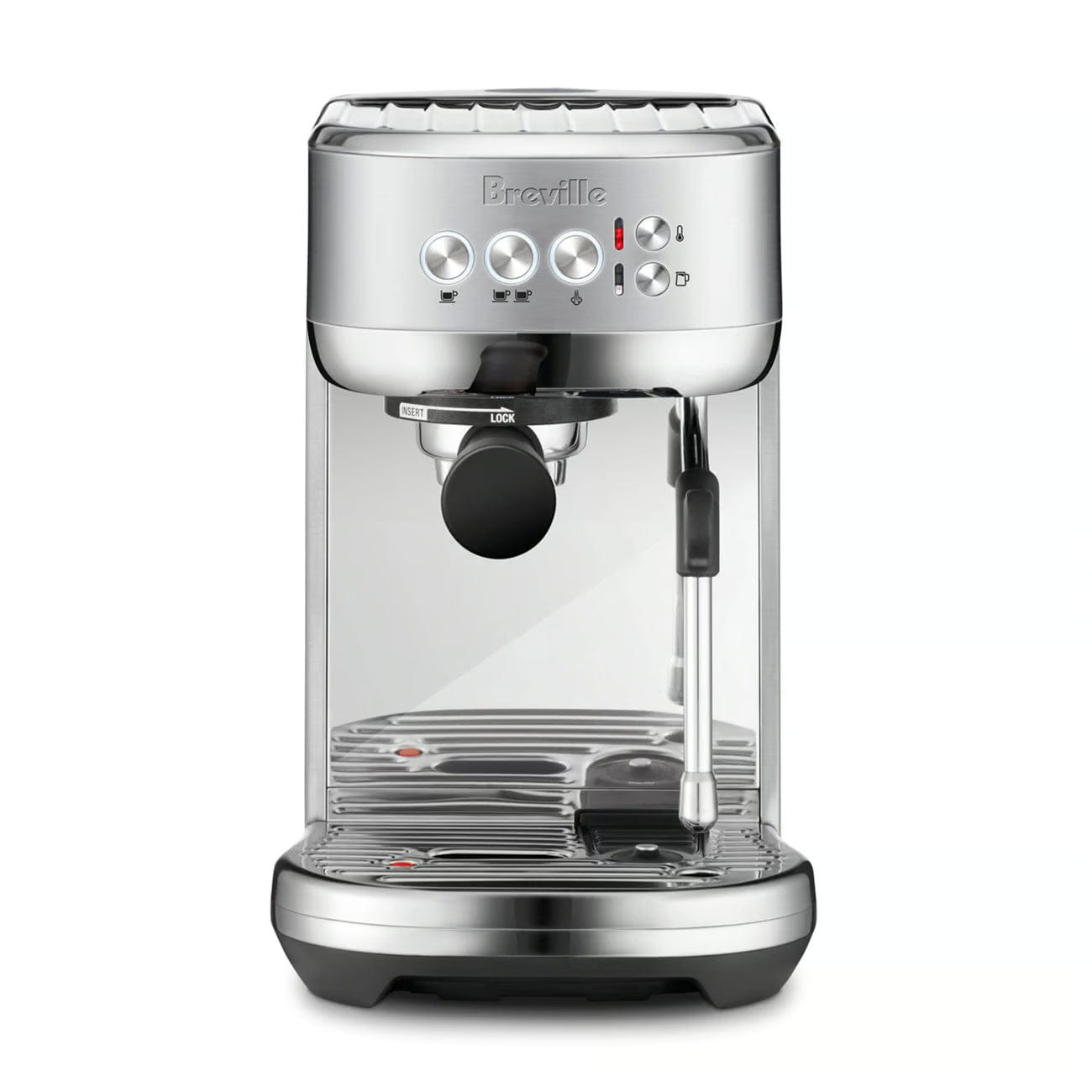
Best OverallBreville Bambino Plus
Compact, fast-heating semi-automatic with automatic milk texturing and 3-second ThermoJet heat-up. The best first machine for a home barista who wants real espresso without a steep learning curve — and without sacrificing bench space.
✓ Fast heat-up · automatic milk · compact footprint · PID✗ No built-in grinder · 54mm portafilter · single boilerView Breville Bambino Plus →
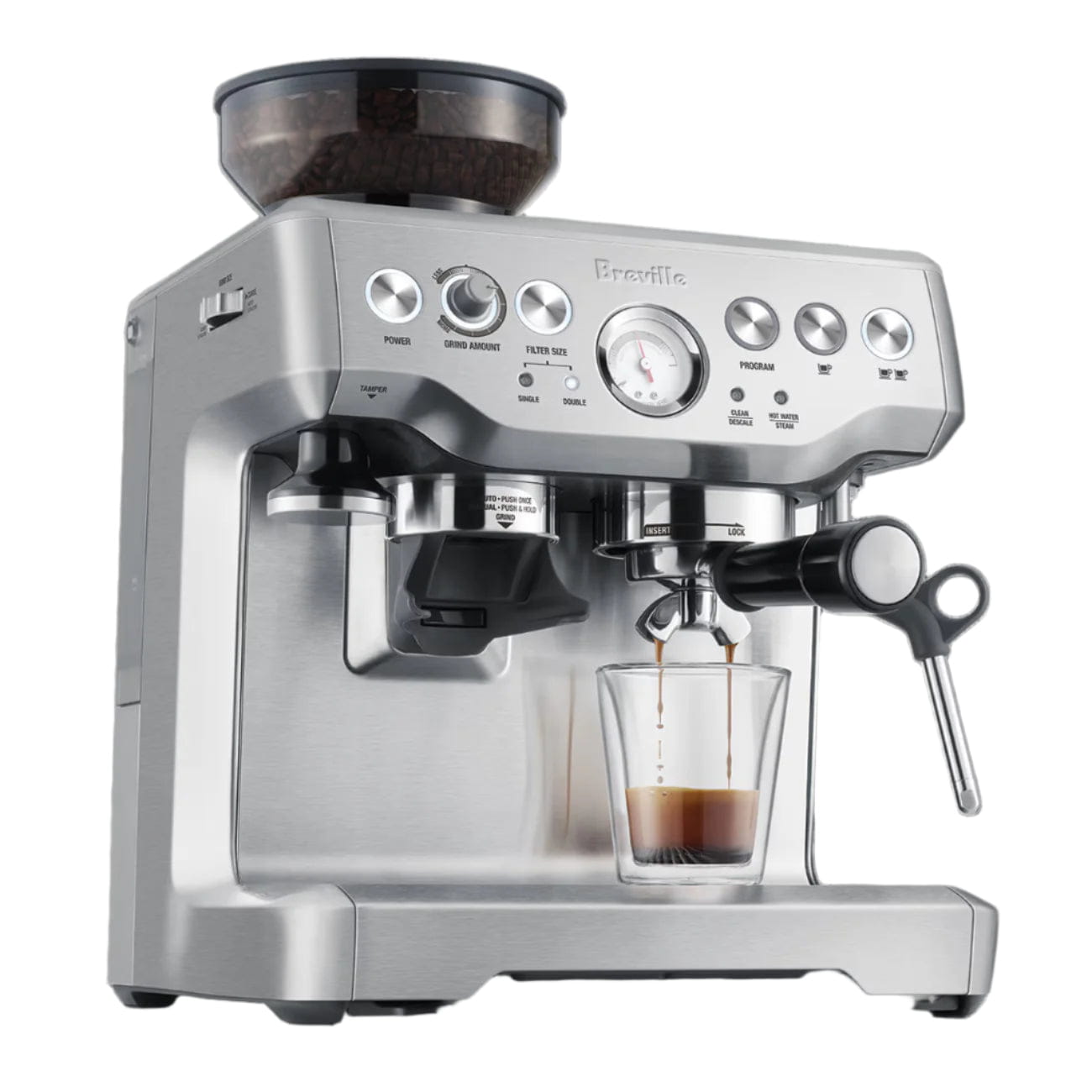
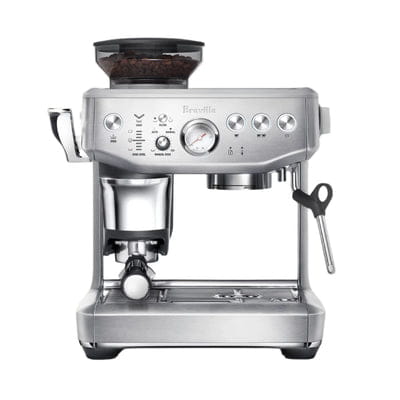
Best for BeginnersBreville Barista Express
All-in-one machine with built-in conical burr grinder and manual controls. Eliminates the need for a separate grinder purchase and teaches you the fundamentals of grinding, tamping, and extraction in one workflow.
✓ Built-in grinder · all-in-one value · teaches real technique✗ Grinder limits upgradeability · 45-sec warm-upView Breville Barista Express →
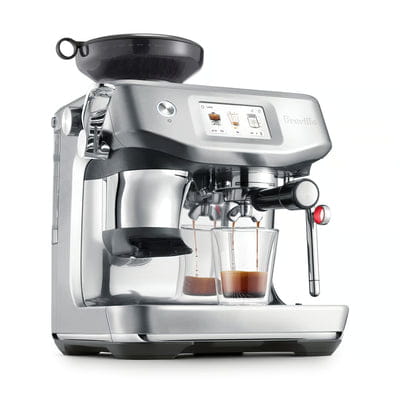
Best Guided All-in-OneBreville Barista Touch Impress
Touchscreen interface, auto-tamping, and automatic milk texturing — the most guided all-in-one machine at this price. Delivers excellent results with minimal technique required, making café-quality espresso accessible from day one.
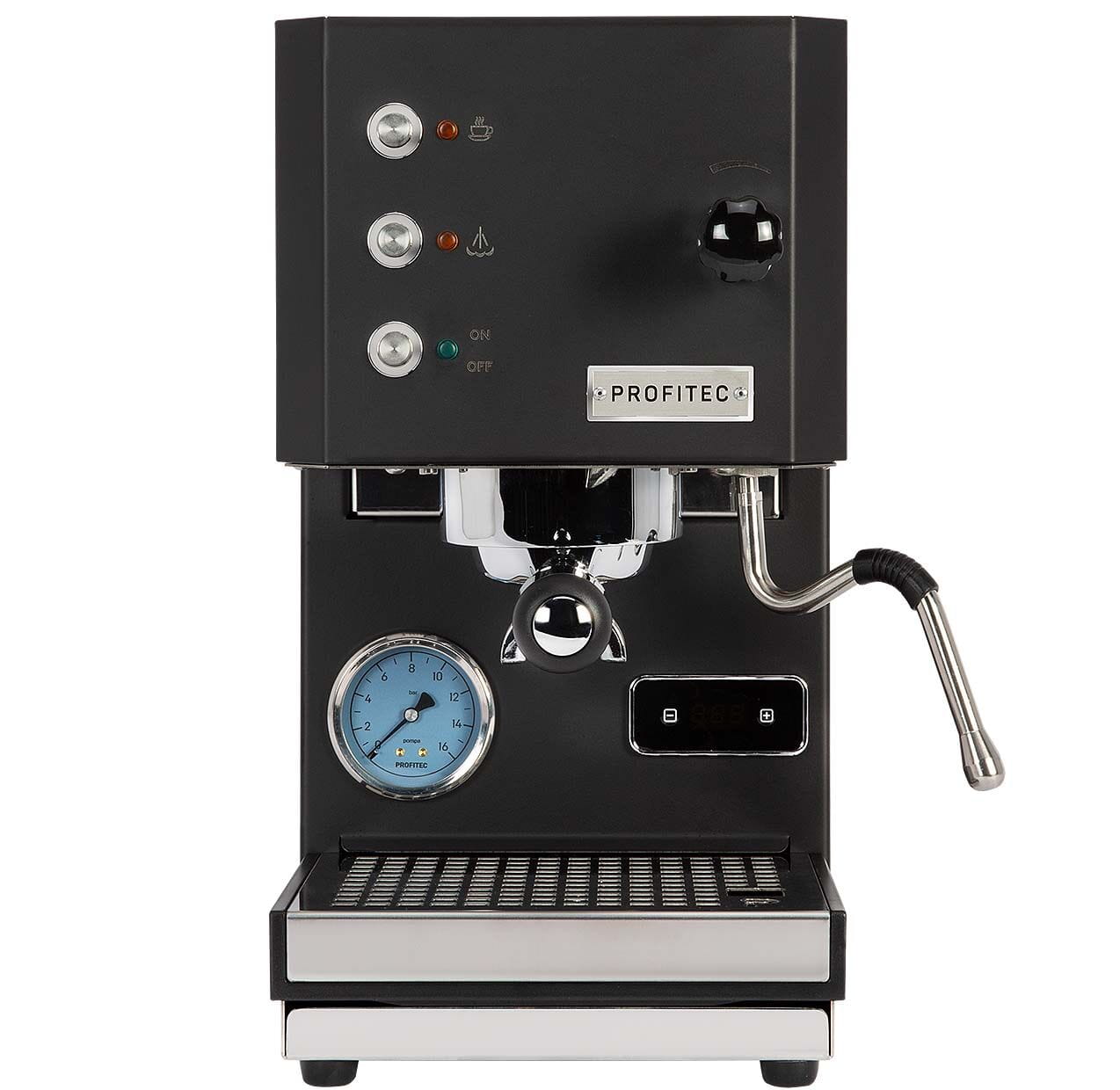
Single-boiler machine with PID temperature control and a shot timer — the ideal upgrade from an all-in-one beginner machine. German engineering, compact footprint, and the temperature precision to properly explore different coffees and roast profiles.
✓ PID control · shot timer · excellent build quality · fast heat-up✗ Single boiler — mode switch between brew and steamView Profitec Go →
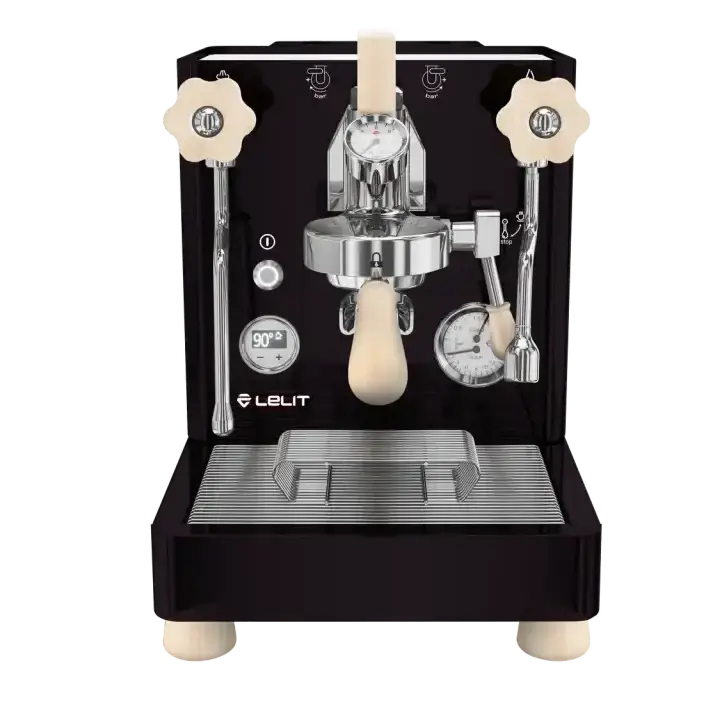
Best PremiumLelit Bianca V3
Dual-boiler machine with an analogue flow control paddle — one of the most capable home espresso machines available anywhere. Simultaneous brewing and steaming, precise dual PID, and full manual flow profiling for extracting the best from any coffee, any roast.
✓ Dual boiler · flow control paddle · rotary pump · dual PID✗ Premium price · benefits need a good grinder alongside itView Lelit Bianca V3 →
Best Semi-AutoBreville Barista Express Impress
Adds assisted tamping and a smarter dosing system to the Barista Express formula. The Impress puck system guides you to a consistent, level tamp every time — a genuine improvement for anyone developing their technique.
Final Buying Checklist — 5 Questions Before You Commit
1
How many coffees per day?
1–3 shots: entry to mid-range. 4–8 shots: heat exchanger or dual boiler for faster workflow. More: you're in commercial territory.
2
Do you drink milk-based coffees?
If yes, steam power and wand quality matter. Single boiler requires a mode switch — heat exchanger or dual boiler removes that wait entirely.
3
What's your total budget including grinder?
A $700 machine + $350 grinder outperforms a $1,050 machine with no grinder every time. Set a realistic all-in budget before shopping.
4
How involved do you want to be?
Want to learn and improve: semi-automatic. Want a great cup at a button press: automatic. Be honest — the right answer saves frustration.
5
Is Australian warranty and service available?
Always confirm before purchasing. Di Pacci provides full Australian warranty and in-house servicing from our Sydney team on all machines we sell.
Frequently Asked Questions — Espresso Machines Australia
For beginners, a semi-automatic machine with a built-in grinder — such as the Breville Barista Express — is the best starting point. It removes the need to buy a separate grinder immediately, keeps the workflow manageable, and teaches you the fundamentals of grinding, tamping, and extraction without overwhelming complexity. As your skills develop, you can move to a dedicated standalone grinder and a more capable machine. If you want automatic milk frothing from day one, the Breville Bambino Plus is Di Pacci's most recommended starter machine.
A single boiler machine uses one boiler for both brewing and steaming — you must wait for it to switch between temperatures, slowing milk-drink workflow. A heat exchanger (HX) machine keeps a large boiler at steam temperature while running brew water through a separate internal coil, allowing simultaneous brewing and steaming without a second boiler. A dual boiler machine has two completely independent boilers — one for precise brew temperature and one for steam — delivering the best temperature stability and fastest, most flexible workflow. The Lelit Elizabeth PL92T is Di Pacci's most recommended dual-boiler machine at an accessible price point.
Budget $200–$500 for a solid entry-level machine that will teach you the basics. $500–$1,500 is where you get PID temperature control, better steam wands, and machines built to last many years — this is the sweet spot for most home baristas. $1,500–$3,000+ is the premium tier with dual boilers, rotary pumps, and flow control. Regardless of tier, always factor in the cost of a quality grinder — it has more impact on flavour than the machine itself. Call Di Pacci on (02) 9758 0760 for personalised budget advice.
Not immediately — a built-in grinder is a perfectly good way to start. Over time, as your skills develop, a dedicated standalone grinder will offer finer grind adjustment, better particle consistency, and more flexibility when switching between coffees. Many experienced home baristas eventually run a dedicated grinder alongside their machine for when quality is the priority. Di Pacci stocks a full range of home grinders across all budgets.
PID stands for Proportional-Integral-Derivative — a real-time temperature control algorithm that continuously monitors the boiler temperature and adjusts the heating element to maintain a precise, stable target. Without PID, machines use a simple on/off thermostat that allows temperature to fluctuate over a wider range, affecting extraction consistency. PID is particularly valuable when brewing lighter roasts, which are more sensitive to temperature variation, and when you want to deliberately adjust brew temperature for different coffees.
Backflush daily and wipe the steam wand after every use. Deep clean the portafilter, basket, and shower screen weekly with group head cleaning detergent. Descale monthly if using unfiltered tap water, or every 2–3 months with a filtered supply. A professional service — covering group head gaskets, solenoid valves, and boiler inspection — is recommended annually for machines used daily. Di Pacci's Sydney service team handles warranty and out-of-warranty servicing for all brands we sell →
About the AuthorMik Di Pacci — Founder & CEO, Di Pacci Coffee Company
Mik Di Pacci is the Founder & CEO of Di Pacci Coffee Company, Australia's largest coffee machine specialist operating since 2010. Di Pacci operates five showrooms across Sydney, Melbourne, Perth, Port Macquarie, and Queensland, stocking 5,000+ home and commercial machines with in-house service and full Australian warranty support.
Shop Espresso Machines at Di PacciAustralia's largest coffee machine specialist — expert advice, free shipping over $200, full Australian warranty, in-house service across 5 showrooms · (02) 9758 0760