How Many Group Heads Does Your Cafe Need?

November 10, 2026
Buying Guides · Commercial Coffee Machines How many group heads does your cafe need

A group head is where the portafilter locks in and espresso is actually pulled, so the number of group heads on a machine sets a hard ceiling on how many shots can be made at once. Buy too few and you will watch a queue build during your morning rush. Buy too many and you have paid for brewing capacity, bench space and ongoing servicing you will rarely use. The right number comes down to your peak-hour customer count, not the size of your venue or how busy you hope to become. This guide walks through how to work it out, with genuine Di Pacci machines at each group count.

What Is a Group Head, Exactly?

A group head is the brewing position on an espresso machine where a portafilter is locked in and hot water is pushed through the coffee under pressure. Each group head can pull one or two shots into one cup, or a double shot into two cups, independently of the others. A 1 group machine can only brew one order at a time, a 2 group machine can brew two orders simultaneously, and so on. More group heads means more simultaneous throughput, not faster individual extraction.

1 Group: For Steady, Lower-Volume Service

A 1 group machine suits venues where coffee is a steady trickle rather than a rush, since only one drink can be made at a time. This fits kiosks, small offices, waiting rooms and client-facing businesses where customers are not queuing back to back.

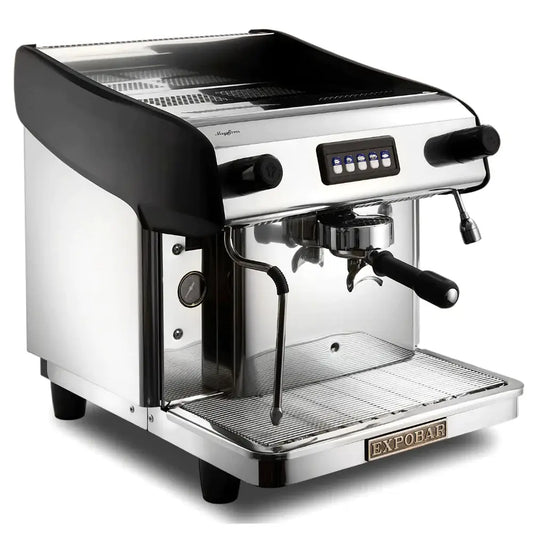
Expobar Megacrem 1 Group High Cup Compact Coffee Machine

Expobar Megacrem 1 Group High Cup Compact Coffee Machine

Best for: kiosks, offices and low-volume venues

  • Group heads: 1 Group
  • Power: 10 amp, single phase
  • Boiler: 6 litre copper heat exchanger
  • Price: $4,095.00 AUD
View at Di Pacci
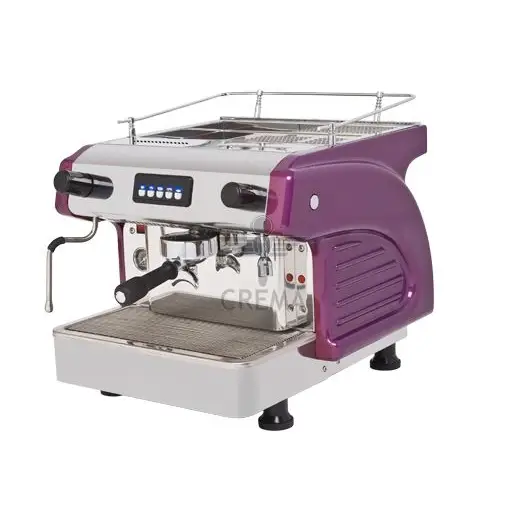
1 Group Ruggero Classic High Group Compact Coffee Machine

1 Group Ruggero Classic High Group Compact Coffee Machine

Best for: waiting rooms and small client-facing businesses

  • Group heads: 1 Group, E61
  • Power: 10 amp, single phase
  • Boiler: 6 litre, 99.9% pure copper, heat exchanger
  • Price: From $5,300.00 AUD
View at Di Pacci

2 Group: The Common Choice for Small to Medium Cafes

A 2 group machine is the most common configuration for a small to medium cafe, since it lets two shots be pulled at once during busier periods without the footprint or cost of a 3 group setup.

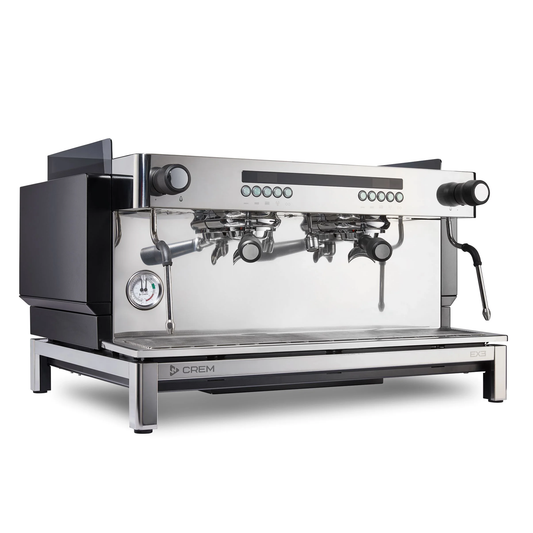
CREM EX3 2 Group High Group Coffee Machine

CREM EX3 2 Group High Group Coffee Machine

Best for: small to medium cafes with steady walk-in traffic

  • Group heads: 2 Group, high group configuration
  • Power: 15 amp standard (20 amp with the optional 4500 watt element upgrade)
  • Boiler: 11.5 litre, 99.9% pure copper, automatic filling
  • Price: From $6,700.00 AUD (was $7,370.00)
View at Di Pacci
Expobar 2 Group MegaCrem Compact Coffee Machine

Expobar 2 Group MegaCrem Compact Coffee Machine

Best for: cafes wanting a compact 2 group footprint

  • Group heads: 2 Group
  • Price: $5,273.00 AUD
View at Di Pacci

3 Group: For Busier Cafes and Back-to-Back Service

A 3 group machine is worth considering once your venue is regularly running two baristas during peak periods, or your queue regularly backs up on a 2 group setup. Three independent brewing positions let staff work through a morning rush without one order waiting on another to finish.

San Marino Lisa 3 Group Coffee Machine

San Marino Lisa 3 Group Coffee Machine

Best for: busier cafes needing three simultaneous brewing positions

  • Group heads: 3 Group
  • Features: Automatic refill, external pump, stainless steel finish
  • Origin: Italian made
  • Price: $4,999.00 AUD
View at Di Pacci

Boiler size and electrical requirements were not listed on this product's specification page. Confirm these directly with Di Pacci on (02) 9758 0760 before finalising your electrical plan.

Group Heads at a Glance

Group Heads Simultaneous Shots Typical Venue Example Machine
1 Group 1 at a time Kiosk, office, waiting room, low-volume venue Expobar Megacrem 1 Group ($4,095)
2 Group 2 at a time Small to medium cafe with steady walk-in traffic CREM EX3 2 Group (from $6,700)
3 Group 3 at a time Busier cafe running two baristas during peak periods San Marino Lisa 3 Group ($4,999)

These are examples from the current Di Pacci range, not a universal price rule. Price depends on brand, boiler type and configuration, not group-head count alone, so always check the specific model you are considering.

How to Work Out the Right Number for Your Cafe

  1. Count your busiest expected hour of walk-in customers, not your average hour.
  2. Estimate how long one drink takes to pull, including milk steaming where relevant.
  3. If a single barista on one group head cannot clear your peak-hour queue in a reasonable wait time, step up a group.
  4. Factor in how many baristas you will actually have on shift, since extra group heads are wasted without staff to run them.
  5. Leave headroom for growth, but do not pay for a 3 group machine to cover volume you do not yet have.

Other Factors Besides Group Count

Boiler Size

A larger boiler recovers heat faster between shots, which matters more during continuous back-to-back service than the group count alone. A 2 group machine with a strong boiler can sometimes outperform a 3 group machine with a smaller one.

Electrical Supply

More group heads generally means a larger boiler and a higher amp draw, so confirm your venue's available circuit before committing to a bigger machine. A dedicated circuit may need to be installed by a licensed electrician.

Common Mistakes

  • Buying extra group heads for future growth that may not arrive, rather than sizing for current peak-hour volume.
  • Assuming more group heads always means faster service, when boiler recovery and barista staffing matter just as much.
  • Choosing group count based on venue size or seating rather than actual queue length during the busiest hour.
  • Overlooking the electrical and bench-space requirements of a larger machine before ordering.

Frequently Asked Questions

What is a group head on a coffee machine?

It is the brewing position where the portafilter locks in and espresso is pulled. Each group head can brew independently of the others.

How many group heads does a small cafe need?

Most small cafes with steady walk-in traffic are well served by a 2 group machine. A 1 group machine can suit lower-volume venues such as kiosks or offices.

When should I upgrade to a 3 group machine?

Consider a 3 group machine once you are regularly running two baristas during peak periods or your queue consistently backs up on a 2 group setup.

Does more group heads mean faster coffee?

Not for a single drink. More group heads increase how many drinks can be brewed at once, not how quickly any one shot is pulled.

Can one barista run a 3 group machine effectively?

A single barista can only use one group head at a time, so extra group heads are only useful once you have enough staff on shift to run them simultaneously.

Is a bigger machine always a better investment?

Not necessarily. A machine sized above your actual peak-hour volume adds upfront cost, bench space and servicing requirements without a matching benefit in service speed.

Final Verdict

Size your machine to your busiest hour, not your biggest ambitions. A 1 group machine such as the Expobar Megacrem 1 Group suits steady, lower-volume venues, a 2 group machine such as the CREM EX3 2 Group covers most small to medium cafes, and a 3 group machine such as the San Marino Lisa 3 Group is worth the extra investment once you are consistently running two baristas during peak periods. Whichever you choose, confirm boiler size and electrical requirements for the specific model before ordering.

Leave a comment