The Ultimate Guide to Coffee Bean Sample Packs in Australia
November 3, 2025
Di Pacci — Coffee Beans Guide · Australia 2026
How to Choose Coffee Beans — Complete Beginner's Guide
✍️ By Mik Di Pacci · Founder & CEO, Di Pacci Coffee Company · Updated July 2026
Walking into a coffee aisle — or browsing an online store for the first time — is genuinely overwhelming. Single origin or blend? Light roast or dark? Arabica or Robusta? Whole bean or pre-ground? Most beginners end up guessing, buying the wrong thing, and wondering why their coffee doesn't taste the way they hoped. This guide cuts through all of it. By the end you'll know exactly how to choose coffee beans that match your taste, your machine, and your budget — and you'll never have to guess again.
⚡ Quick AnswerFor most beginners: buy a medium roast blend in whole bean format, check the roast date is within 4 weeks, and look for 100% Arabica. The Di Pacci 4 × 250g Sample Pack ($39.95) is the single best first purchase — taste four blends, find what you love, then commit to a 1kg bag.
3Roast levels to understand
5–28 daysPeak freshness window
100%Arabica — always
4 blendsDi Pacci — in-house roasted
Step 1 — Know Your Brew Method First
The single most important factor when choosing coffee beans is how you're going to brew them. Different methods extract coffee differently — a bean that tastes incredible as a pour-over can taste flat or bitter as an espresso, and vice versa. Before buying anything, match your method below.
☕Espresso MachineMedium to dark roast blend
High pressure, short extraction, intense flavour. Look for blends labelled "espresso roast" — designed for 9-bar extraction. Sweetness and body are essential.
🫗Filter / Pour-Over / DripLight to medium roast
Slower, lower-pressure brewing. Light to medium roasts express fruit, floral, and origin character. Single origins shine here. Avoid very dark roasts.
🤖Automatic Bean-to-CupMedium to dark blend
Most automatics are calibrated for medium to dark espresso-style roasts. A blend is safer than single origin. Di Pacci's Elements or After Dark suit most automatics well.
🧊Cold BrewMedium to dark roast
Long, cold extraction. Medium to dark roasts with chocolate and caramel notes produce the smoothest result. Coarse grind, 12–24 hours, no heat required.
🫙French Press / PlungerMedium roast
Full-immersion brewing produces a rich, full-bodied cup. Medium roasts with good body work best. Avoid very light roasts — they can taste thin without pressure extraction.
🔩Moka Pot / StovetopMedium to dark blend
Produces a strong, concentrated brew similar to espresso. Use medium to dark roasts ground slightly coarser than espresso. A classic Italian-style blend is ideal.
💡 Quick RuleEspresso and automatic machines: medium to dark roast blend. Filter, pour-over, and AeroPress: light to medium roast works best. When in doubt, medium roast is the most forgiving and versatile choice across all methods.
Step 2 — Understand Roast Levels
Roast level is the most visible indicator on a coffee bag — and one of the most misunderstood. Here's what light, medium, and dark roast actually mean for flavour in your cup.
Roast Level
Flavour Profile
Body
Best For
Di Pacci Example
Light Roast
Bright, fruity, floral, acidic — origin character shines
"Dark roast = strong coffee." This is incorrect. Roast level affects flavour, not caffeine. A light roast actually retains slightly more caffeine than a dark roast. Strength comes from your dose and brew ratio — not the colour of the bean.
Step 3 — Blend vs Single Origin
☕ Blend — Start HereBest for beginners · Most forgiving
✓Two or more origins combined for consistent, balanced flavour
✓Designed to taste the same batch after batch
✓More forgiving to brew — suits a wider range of machines
✓Ideal for milk-based drinks — sweetness and body hold up
✓The right starting point for anyone new to specialty coffee
✓Di Pacci: Elements, After Dark, By The Bay, Sydney Road
🌍 Single Origin — Explore LaterOnce you've developed a palate
✓Beans from one specific country, region, or farm
✓Expresses the unique character of its growing region
✓Flavour varies seasonally — a feature, not a problem
✓Best brewed as filter, pour-over, or AeroPress
✓More interesting once you know what profiles you enjoy
💡 Verdict for BeginnersStart with a blend. Blends are crafted for consistency — more forgiving to brew, work across more machines, and specifically designed to taste great as espresso and in milk drinks. Once you've found what you enjoy, single origins are worth exploring. Di Pacci's 4 × 250g sample pack includes all four blends — the fastest way to find your preferred style without committing to a full 1kg bag.
Step 4 — Arabica vs Robusta
Almost every specialty coffee bag in Australia uses Arabica beans — and with good reason.
✅ Arabica — Always Choose This100% Arabica in all Di Pacci blends
✓Grown at high altitude, slower to develop
✓Sweeter, more nuanced acidity
✓Wide range of fruity, floral, and caramel notes
✓Lower caffeine than Robusta
✓Used in virtually all specialty and premium coffee
⚠️ Robusta — Generally AvoidFound in cheap blends and instant coffee
✗Hardier plant, grows at lower altitude
✗More caffeine but harsher, more bitter taste
✗Used in cheap supermarket blends to cut costs
✗Occasionally used in small quantities for crema
✗If a bag doesn't specify Arabica — it's likely Robusta
Step 5 — How to Read a Coffee Bag Label
A quality coffee bag tells you everything you need — if you know what to look for. Here's what each element means.
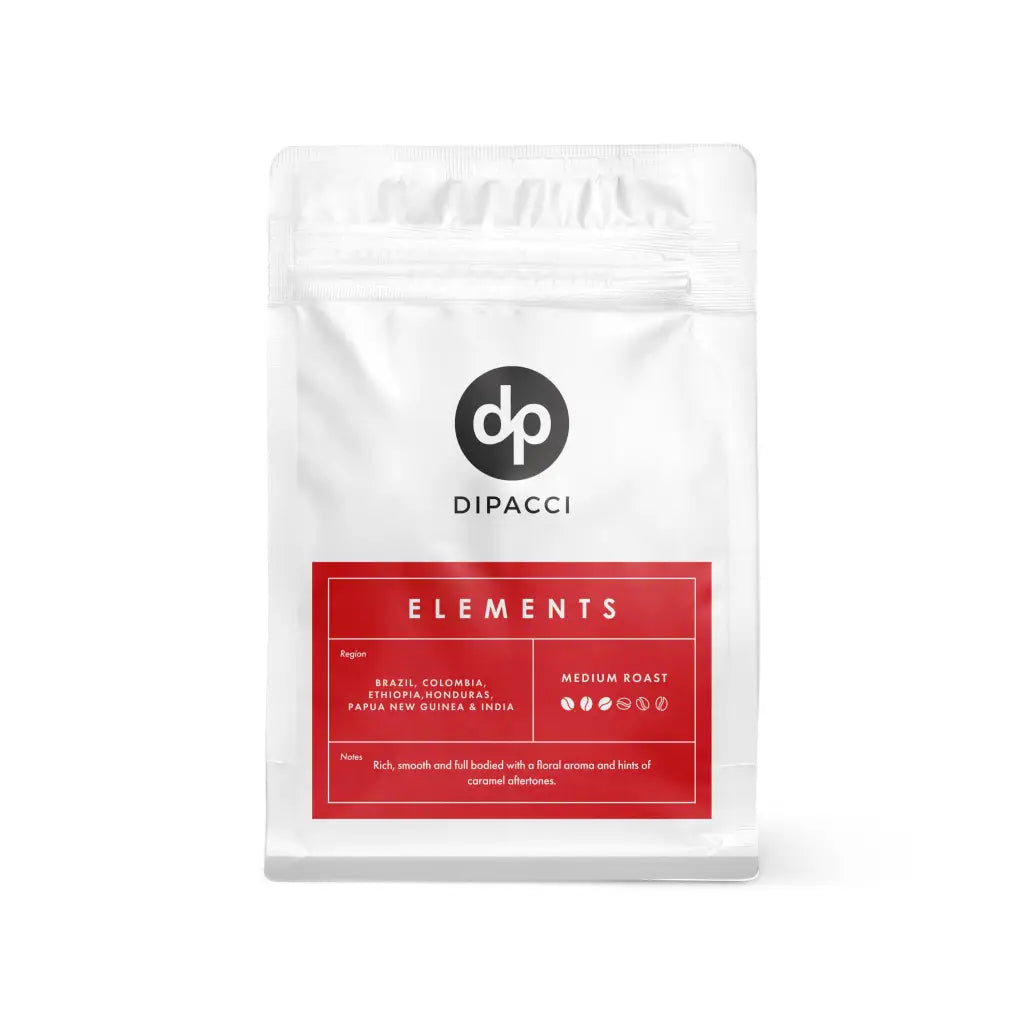
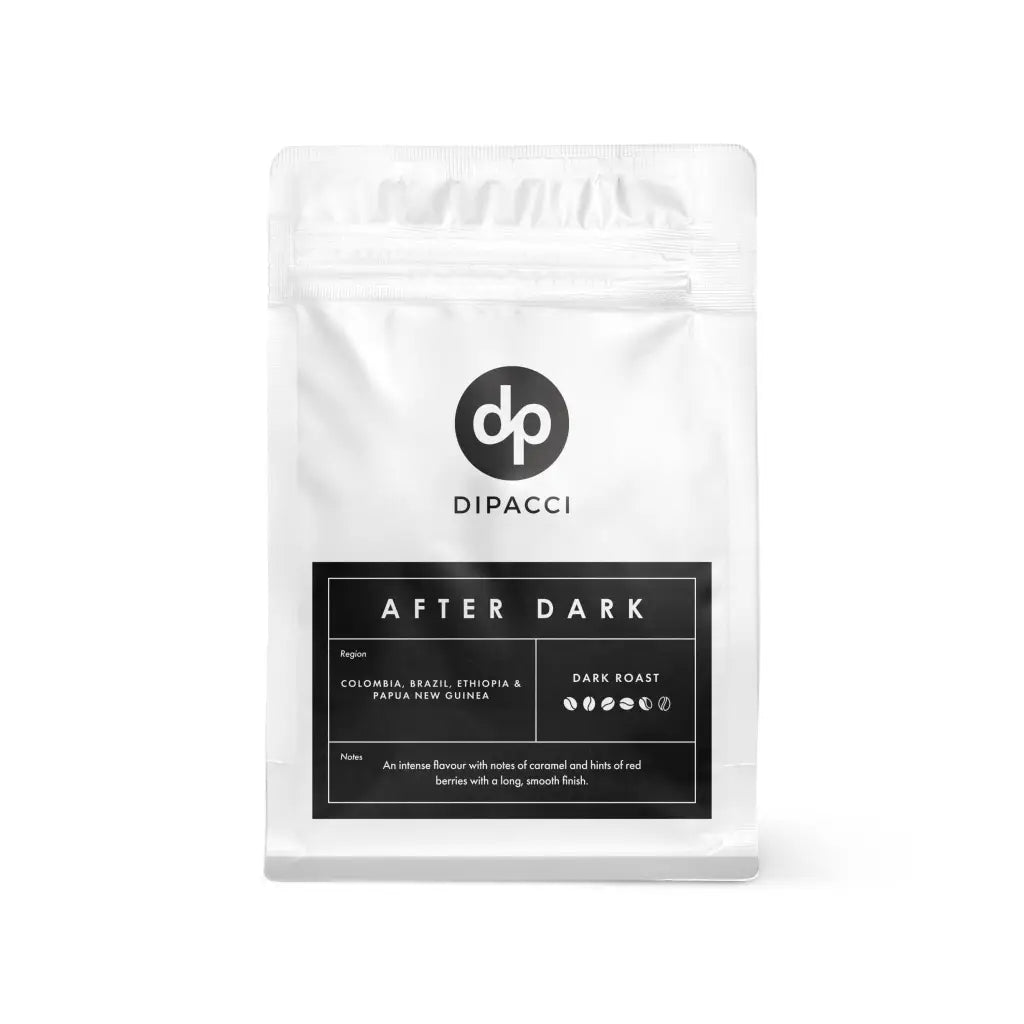
Di Pacci Elements (medium roast, left) and After Dark (dark roast, right) — both include roast date, origin, tasting notes, and recommended brew method on the bag.
Label Element
What It Means
What to Look For
🗓 Roast Date
When the beans were roasted
Within 4 weeks — avoid any bag without a roast date
🌍 Origin
Where beans were grown
Ethiopia = fruity/floral · Colombia = caramel · Brazil = chocolatey/nutty · Kenya = bright/berry
🔥 Roast Level
Light, medium, or dark
Match to your brew method — see Step 2 above
☕ Tasting Notes
Predicted flavour descriptors
Genuine indicators — if you enjoy those flavours in food, you'll enjoy them in coffee
✗ Pre-Ground — Only If NecessaryAcceptable short-term — invest in a grinder
✗Ground coffee oxidises rapidly — stale within 1–2 weeks of opening
✗Locked into one grind size — not ideal for espresso
✗Significantly less fresh than whole bean
✓Convenient if you have no grinder yet
✓Buy small quantities frequently if using pre-ground
💡 Most Impactful Beginner UpgradeSwitching from pre-ground to whole bean with a basic burr grinder will improve your coffee more than buying more expensive beans. Browse Di Pacci's home coffee grinder range →
Step 7 — Freshness & Roast Date — The Most Overlooked Factor
A $15 bag of freshly roasted specialty coffee will almost always taste better than a $40 bag sitting in a warehouse for three months. Freshness is the single biggest quality variable most beginners overlook.
Days 1–4
Too Fresh — Rest First
Still degassing CO₂. Can produce uneven extraction and over-active crema. Espresso benefits from resting 5–10 days post-roast. Filter can be brewed from day 2–3.
Days 5–28
✅ Peak Window — Brew Now
This is when coffee tastes its best — complex, aromatic, full of the flavours the roaster intended. Buy, brew, and enjoy during this period. The sweet spot for espresso is days 7–21.
30+ Days
Declining — Avoid If Possible
Still drinkable but losing complexity, aromatics, and brightness rapidly. Most supermarket coffee — with no roast date, or a "best before" date only — lives permanently in this zone.
Always check the roast date — not the "best before" date
Buy from roasters who roast to order — not from warehouse stock
Buy in smaller quantities (250g–1kg) more frequently rather than bulk buying rarely
Store in an airtight container away from heat, light, and moisture
Never store coffee in the fridge (condensation) or a clear glass jar on the bench (light degrades quality)
🫘 Di Pacci Roasts to OrderEvery Di Pacci bag dispatched is freshly roasted before shipping — not aged warehouse stock. You receive coffee in its peak window, not weeks past it. Browse all Di Pacci coffee beans →
Di Pacci's 4 Blends — In-House Roasted, Roselands Sydney
Elements BlendMedium Roast
Balanced — caramel, nuts, gentle fruit. Most versatile blend. Works well in espresso, filter, and automatic machines. The best starting point for beginners.
Bold, intense, rich chocolate and smoky undertones. Cuts through milk beautifully. Best for flat whites, lattes, cappuccinos, and anyone who likes their coffee strong.
Bright, clean, fruity acidity. Best as filter or pour-over — showcases origin character. Also excellent as black espresso for drinkers who love a brighter, lighter cup.
Smooth, sweet, approachable. Caramel sweetness and soft fruit notes. A balanced everyday drinker that works well across espresso and filter. Great gateway from darker roasts.
Best for Beginners — Start HereSample Pack — 4 × 250g$39.95 $79.80
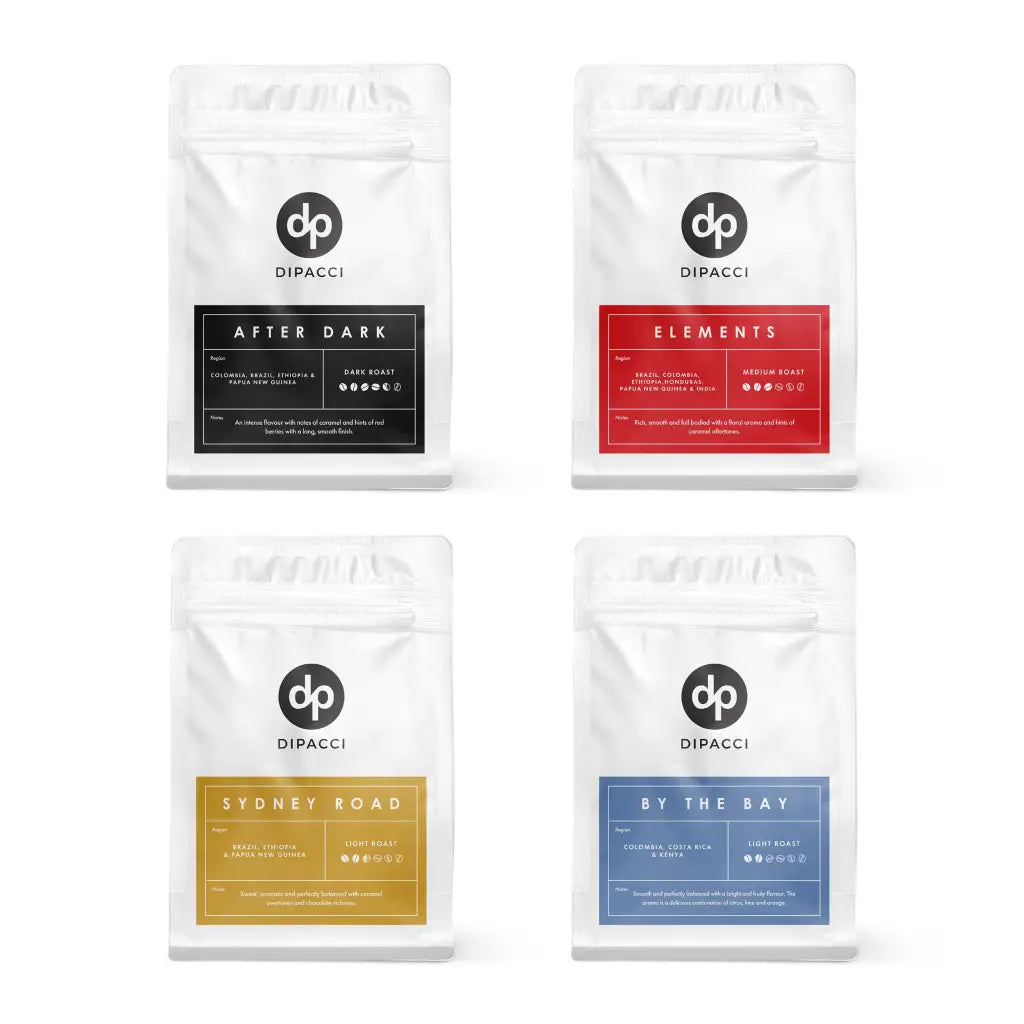
The smartest first purchase for any beginner. Four blends — After Dark (dark), Elements (medium), By The Bay (light), and Sydney Road (light-medium) — each at 250g. Taste all four, compare side by side, and know exactly which you love before committing to a full bag.
Best Value — High VolumeSample Pack — 4 × 1kg$129.95 $220.00
Already sampled at 250g and found your favourites? Scale up with four full 1kg bags — one of each Di Pacci blend. Ideal for households that go through coffee quickly, office buyers evaluating a house coffee, or anyone ready to build a full rotation of roast profiles.
Start with a medium roast blend — the most forgiving and balanced option for any brew method. The Di Pacci Elements Blend is an excellent entry point for espresso and automatic machines. If you want to try multiple options before committing, the 4 × 250g sample pack ($39.95) is the smartest first purchase — you'll taste four different roast profiles and know exactly what you like before buying a full bag.
Light roast is bright, fruity, and acidic — best for filter coffee. Medium roast is balanced with caramel and gentle sweetness — works well for both espresso and filter. Dark roast is bold, chocolatey, and low-acid — ideal for espresso, moka pot, and milk-based drinks. For beginners making espresso or lattes, medium to dark is the safest starting point. Remember: roast level affects flavour, not caffeine strength.
Always whole bean if you have a grinder. Coffee goes stale within 15–30 minutes of grinding, so pre-ground is a significant quality compromise. If you don't have a grinder yet, pre-ground is fine short-term — but buying small quantities frequently. The single best upgrade for your coffee quality is investing in a home burr grinder and grinding fresh for every cup.
For taste, yes — Arabica is superior for specialty coffee. Arabica has more complex, nuanced flavour with natural sweetness and acidity. Robusta is harsher and more bitter, typically used to reduce cost in lower-grade blends and instant coffee. Always look for 100% Arabica on the bag. All Di Pacci blends use 100% Arabica beans.
Check the roast date on the bag — not the best before date. Coffee is at peak quality 5–28 days after roasting. Avoid any bag without a roast date, or with a roast date more than 4 weeks ago. Most supermarket coffee has no roast date and is months old by the time it reaches you. Di Pacci roasts to order — every bag dispatched is freshly roasted before shipping.
Look for medium to dark roast blends labelled for espresso. The beans need enough density and sweetness to extract well under 9-bar pressure. The Di Pacci Elements Blend (medium) and After Dark Blend (dark) are both excellent for home espresso machines — with or without milk. Avoid very light roast single origins until you've developed espresso dialling-in skills.
Start with a blend. Blends are designed for consistency, balance, and to work well across a range of machines and brew methods. They're more forgiving to brew and taste great as espresso and in milk drinks. Single origins are worth exploring once you've developed a palate — they show you what coffee from specific growing regions genuinely tastes like and are particularly impressive as filter coffee.
Store in an airtight container in a cool, dark place — a kitchen cupboard away from the stove is ideal. Keep away from heat, light, moisture, and strong smells. Don't store in the fridge (condensation and odour absorption) or a clear glass jar on the bench (light degrades quality quickly). Consume within 2–4 weeks of the roast date for best flavour. Buy smaller quantities more frequently rather than bulk buying and storing for months.
About the AuthorMik Di Pacci — Founder & CEO, Di Pacci Coffee Company
Mik Di Pacci is the Founder & CEO of Di Pacci Coffee Company, Australia's largest coffee machine specialist since 2010. Di Pacci roasts its own coffee in-house at Roselands, Sydney — four signature blends and rotating single origins — and ships freshly roasted beans across Australia. Every recommendation in this guide is based on 15+ years of hands-on experience helping Australians choose the right coffee for their machine and taste.
Find Your Perfect Coffee Beans at Di PacciFreshly roasted to order in Roselands, Sydney · Free shipping on all coffee beans Australia-wide · (02) 9758 0760