Where Can I Buy Reliable Home Coffee Machines with Warranty in Australia?

The Complete Espresso Machine Buying Guide for 2026.

Brewing a perfect espresso at home can elevate your coffee experience from mundane to masterful. With the espresso machine market evolving rapidly, choosing the right one involves understanding your needs, budget, and skill level. This guide synthesizes insights from expert reviews, tests, and buying advice to help you make an informed decision. Whether you're a beginner or an enthusiast, we'll cover types, key features, budgeting, maintenance, and top recommendations for 2025.

Step 1: Understand the Types of Espresso Machines

Espresso machines vary in automation and control, impacting ease of use and customization. Here's a breakdown:

🔧

Manual (Lever) Machines

You manually control pressure by pulling a lever. Ideal for purists seeking traditional crema and full control, but requires skill and effort.

Best for: Experienced users who enjoy the ritual
🎯

Automatic Machines

Builds on semi-auto with volumetric dosing to auto-stop shots. User-friendly for consistent results, especially with built-in grinders.

Best for: Consistent results with ease
🤖

Super-Automatic Machines

Fully automated—grinds, tamps, brews, and froths with one button. Perfect for convenience, but less control over variables like grind fineness.

Best for: Maximum convenience
View Super-Automatic Machines →

Pod/Capsule Machines

Use pre-packaged pods for quick, mess-free brewing. Convenient but limited in flavor customization and more expensive per shot long-term.

Best for: Quick, mess-free coffee
💡 Quick Tip: Choose based on effort level – Super-autos for least hands-on, manuals for most control.

Step 2: Key Features to Evaluate

Focus on these essentials for quality shots (aim for 195-205°F temperature and 9 bars pressure):

Feature Why It Matters What to Look For
Boiler Type Affects temperature stability and multi-tasking Single boiler (budget, switch modes); Heat exchanger (simultaneous brew/steam); Dual boiler (premium, no wait)
PID Controller Precise temperature control Essential for consistency; adjustable for roasts
Pump Type Builds pressure Vibratory (affordable, louder); Rotary (durable, quieter)
Steam Wand For milk frothing Powerful, articulated wand for microfoam; auto options for beginners
Built-in Grinder Convenience in grinding Burr grinder with multiple settings; standalone for upgrades
Portafilter Size Compatibility with accessories 58mm standard for pros; 54mm common in home models
Pre-Infusion/Flow Control Even extraction, reduces channeling Adjustable for flavor profiling
Materials Durability and safety Stainless steel boiler/external; brass/copper internals
Water Reservoir Refill frequency Large (2L+); filtration to prevent scale
User Interface Ease of use Touchscreens, programmability for beginners

Additional must-haves: Pressure gauge, shot timer, and easy cleaning cycles for optimal performance and maintenance.

Step 3: Budget and Accessories

Budgets range from $200 (basic) to $2,000+ (pro-level). Here's how to plan your investment:

$200-500

Entry-Level

Simple models for beginners. Basic features, manual controls, good for learning the fundamentals.

$1,000+

Premium

Dual boilers, rotary pumps, commercial-grade components. Professional-level results at home.

Essential Accessories to Factor In

⚙️
Grinder

Crucial (70% of flavor impact). Burr models like Baratza Encore ESP ($150+)

Shop Grinders →
⚖️
Tamper & Scale

Precise dosing and tamping ($20-50 each)

Shop Accessories →
🥛
Milk Pitcher & Knock Box

For frothing and waste management ($10-30)

💧
Water Filter & Descaler

Prevent mineral buildup and extend machine life

Shop Cleaning Products →
💰 Budget Tip: Add 20-50% to your machine cost for accessories. Consider warranty and service availability in your area.

Step 4: Maintenance and Tips

📅 Daily

  • Backflush after use
  • Wipe steam wand immediately
  • Empty drip tray and knock box

📆 Weekly

  • Deep clean portafilter and basket
  • Clean shower screen
  • Check water reservoir

📋 Monthly

  • Descale the machine
  • Replace water filter
  • Deep clean group head

Pro Tips for Better Espresso

  • Use filtered water: Test water hardness and use appropriate filtration to prevent scale buildup
  • Fresh beans are essential: Grind just before brewing for maximum flavor. Buy from Di Pacci's fresh roasted beans
  • For milk drinks: Prioritize machines with strong, articulated steam wands for silky microfoam
  • Temperature matters: Aim for 195-205°F (90-96°C) for optimal extraction
  • Practice makes perfect: Consider barista training to master your technique

Top Espresso Machines for 2026

Based on recent tests (pulling hundreds of shots), here are standout picks:

Best for Beginners
Breville Barista Express Impress

Breville Barista Express Impress

~$900

Built-in grinder with auto-tamp and assisted tamping with smiley feedback system. Streamlined workflow for new home baristas.

✓ Pros: Streamlined process, good microfoam, all-in-one
✗ Cons: Grinder has limitations for advanced users
View Product →
Best Budget
Gaggia Classic Pro Espresso Machine

Gaggia Classic Pro

~$450

Commercial-grade parts in a home package. Tinker-friendly design perfect for enthusiasts who want to modify and upgrade.

✓ Pros: Excellent value, commercial components, upgradeable
✗ Cons: No PID, slower steaming than competitors
View Similar Machines →
Best Upgrade
Profitec Go Espresso Machine

Profitec Go

~$1,000

PID temperature control with shot timer. Produces nuanced flavors with sturdy construction and quick heat-up times.

✓ Pros: Sturdy build, precise control, fast heat-up
✗ Cons: Steam wand less powerful than competitors
View Profitec Machines →
Best Premium
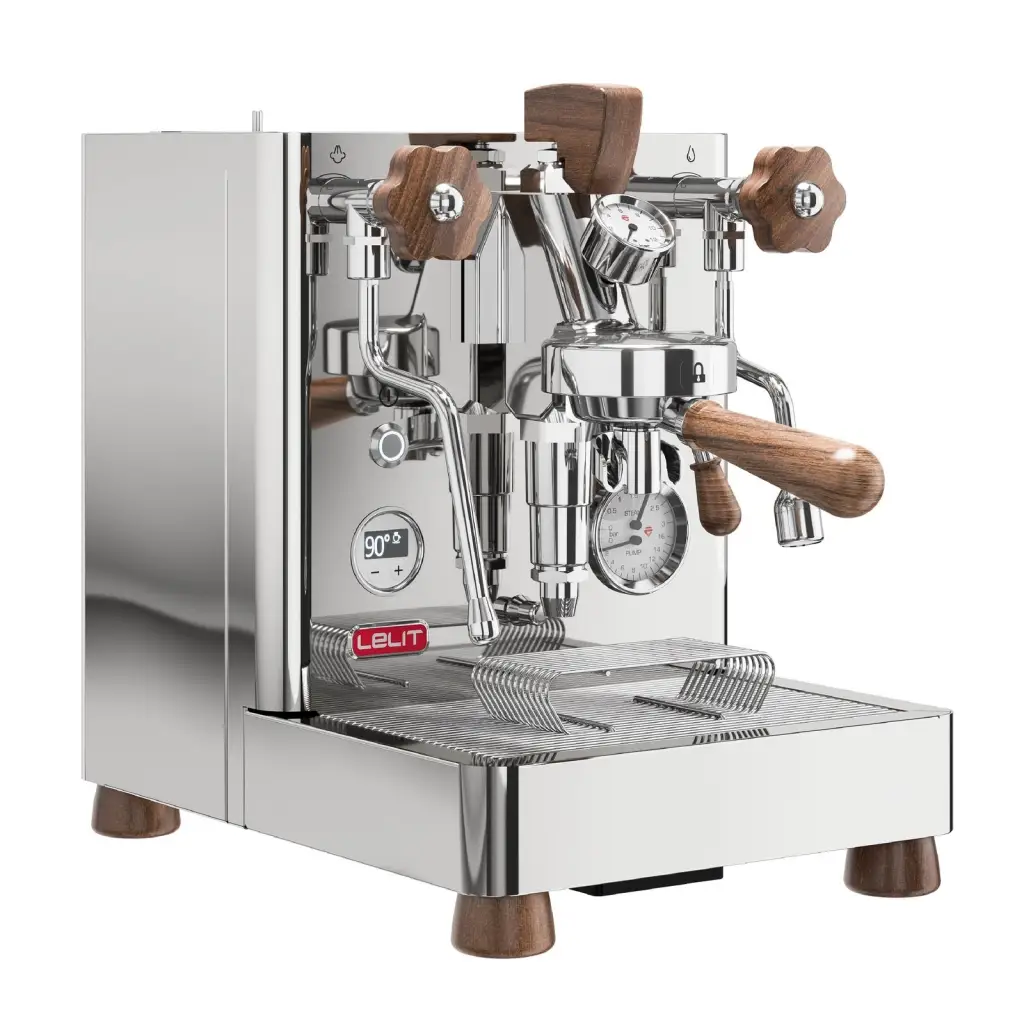
Lelit Bianca V3 Espresso Machine

Lelit Bianca V3

~$2,500

Dual boiler system with flow control paddle. Professional-grade machine with precise temperature control and simultaneous brewing and steaming.

✓ Pros: Dual boiler, flow control, exceptional build quality
✗ Cons: Higher price point, requires counter space
View Lelit Machines →
Best Super-Auto
De'Longhi Dinamica Plus

De'Longhi Dinamica Plus

~$1,200

One-touch operation with app control. Fully automated from bean to cup with programmable drink options.

✓ Pros: Convenient for lattes, app connectivity, minimal effort
✗ Cons: Less customization than manual machines
View Automatic Machines →

Final Checklist Before You Buy

1
Assess daily use

How many shots per day? Will you make milk drinks frequently?

2
Set budget

Include machine, grinder, and essential accessories

3
Prioritize features

PID control, boiler type, steam power based on your needs

4
Read reviews

Check expert tests and user feedback; test machines if possible

5
Check warranty

Verify warranty coverage and service availability in Australia

Leave a comment